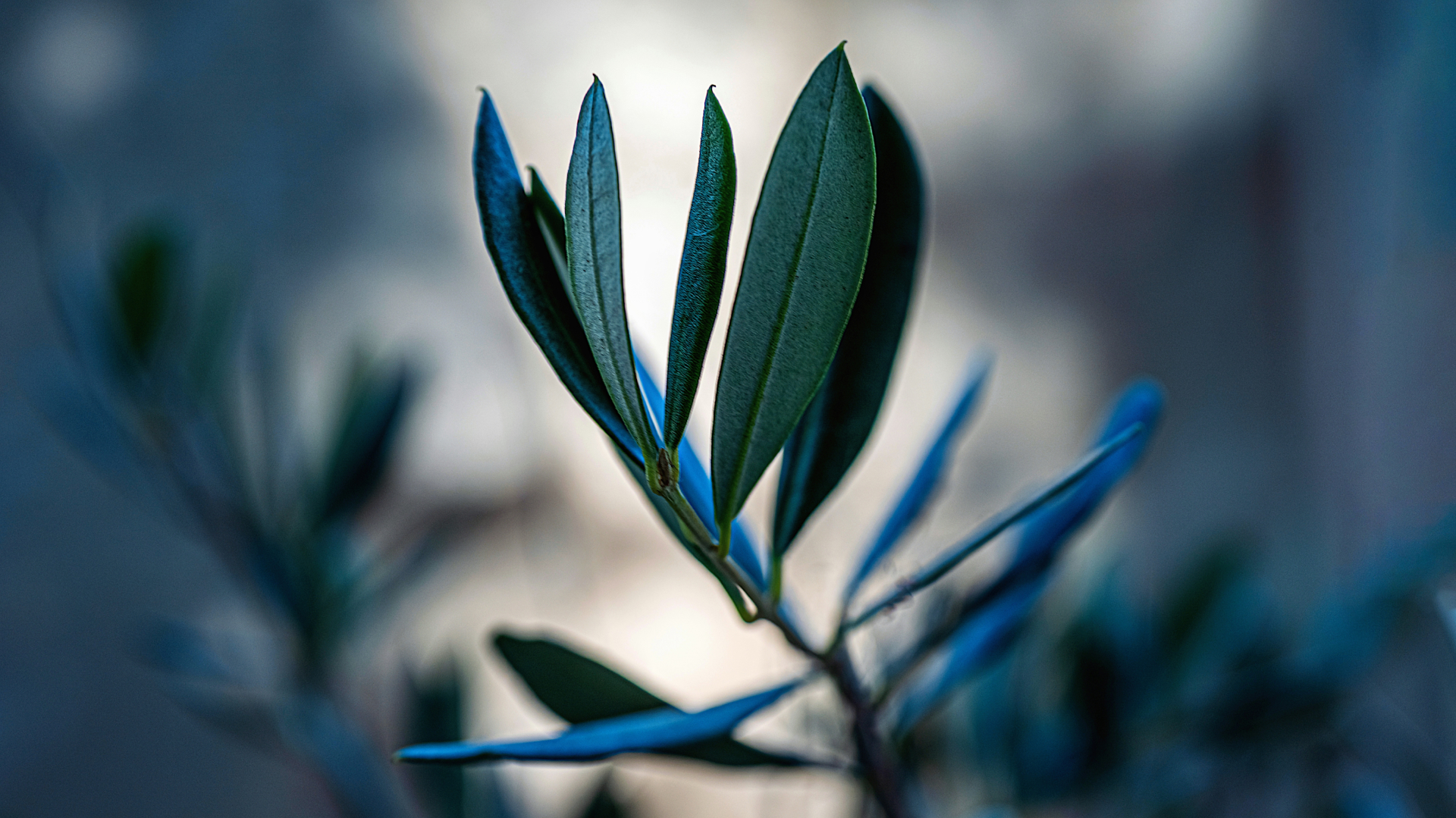


It grew left to its own devices and became a survivor; it was cultivated to reach its full potential. The hardship of one is the privilege of the other, yet both fulfil their role within the same family.
Imprima ou partilhe nas suas redes sociais:
We could be talking about two distant relatives sharing the surname Olive, who have never met. This analogy perfectly describes two varieties of Olea europaea: the wild olive (Olea europaea var. sylvestris) and the cultivated olive tree (Olea europaea var. europaea).
The olive tree, a symbol of peace, wisdom and longevity, with its olive oil – both cultural heritage and a driver of the Mediterranean economy – claims all the glory in our collective imagination.
Meanwhile, the wild olive tree remains largely anonymous, despite sharing its name with one of the most popular seaside locations on Portugal’s Vicentine Coast (yes, Zambujeira do Mar is named after the abundance of wild olives in the area).
Nature vs. Domestication
The wild olive tree may be seen as the underdog of the family, but it holds the secret to survival – knowledge that the cultivated olive has learned and harnessed throughout its evolution.
Considered the direct ancestor, dating back more than 65 million years, the wild olive developed naturally across the Mediterranean, adapting to drought, wind and poor soils. It is native to Portugal, particularly in the south.
Olive domestication is believed to have begun in the Middle East around 6,000 years ago, reaching Portugal through Greek and Phoenician influence and later expanded by the Romans. Today, olive groves shape the national landscape, the result of thousands of years of selection for the best fruit.
Survival vs. Productivity
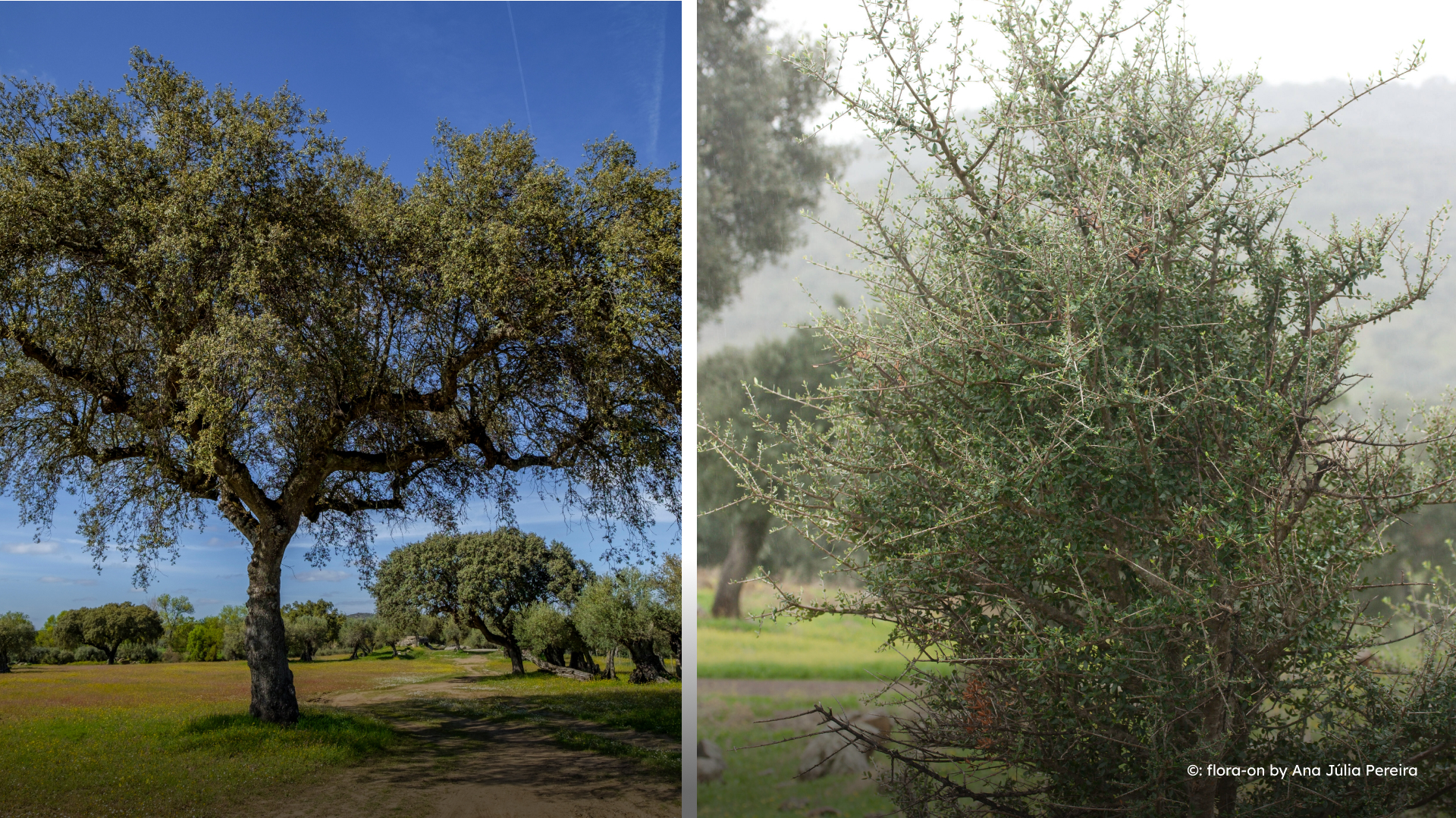
The wild olive tree, typically smaller and more compact, reveals its environmental adaptation through its morphology: deep roots, sometimes thorny branches, a dense canopy and tough evergreen leave that limit water loss.
Its high photosynthetic capacity favours resilience over fruit production. The wild olive fruit is small, bitter and low in pulp, unlike the larger, fleshy, oil-rich cultivated olive, which benefits from the open canopy shaped by agricultural management.
These differences reflect distinct roles: the wild olive feeds wildlife and disperses seeds, while the cultivated olive supports human populations and economies. Even in leaves and flowers – smaller in the wild olive – there is clear evidence of energy allocation geared towards survival.
Ecology vs. Economy
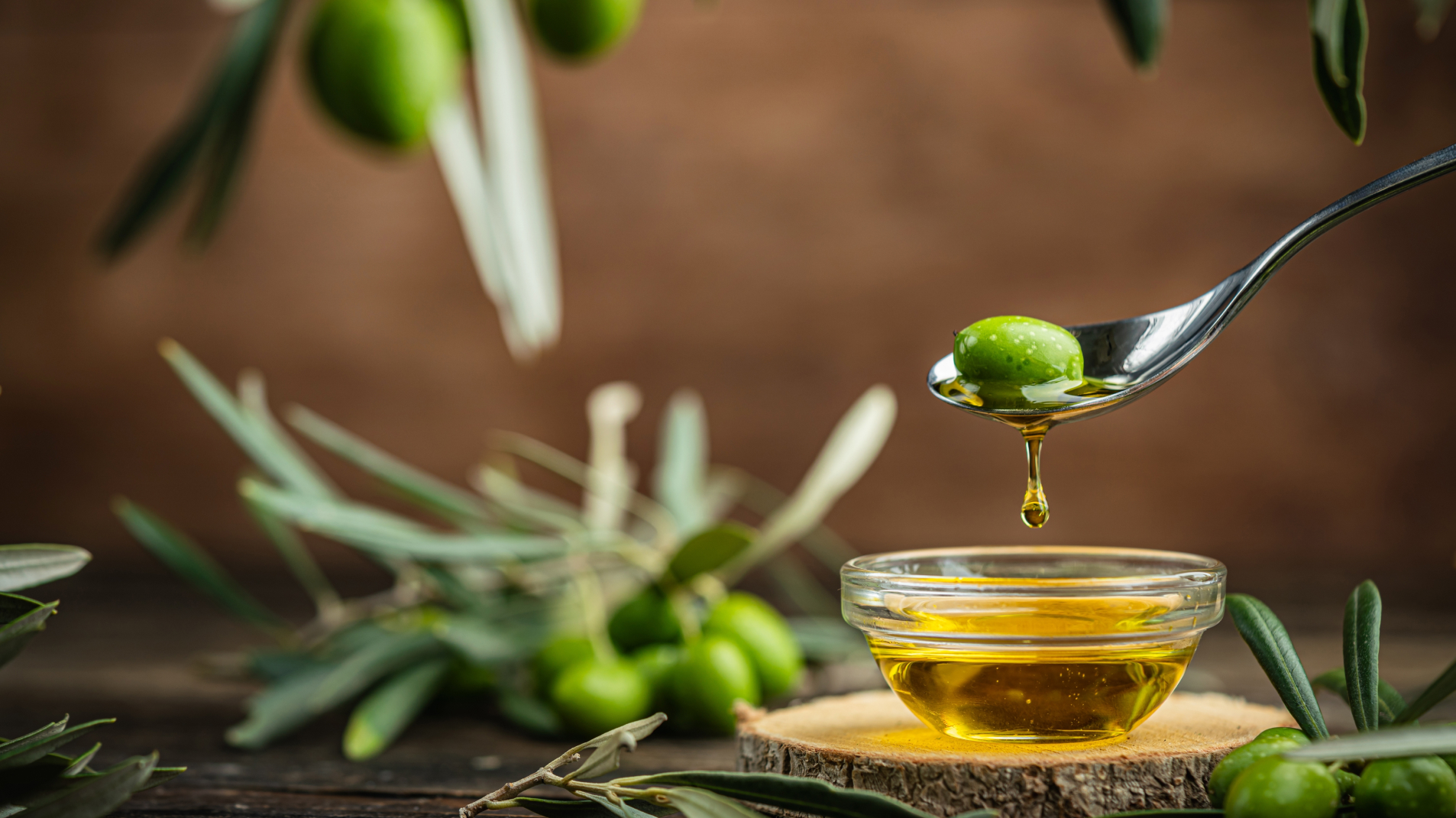
With a vital ecological role, the wild olive tree regenerates soils, promotes biodiversity and strengthens ecosystem resilience. The cultivated olive represents the partnership between nature and human activity, driving the economy and shaping landscapes.
Although this is not a one-sided relationship, the olive tree is the main beneficiary, drawing from the wild olive a genetic reservoir and a rootstock that provides robustness.
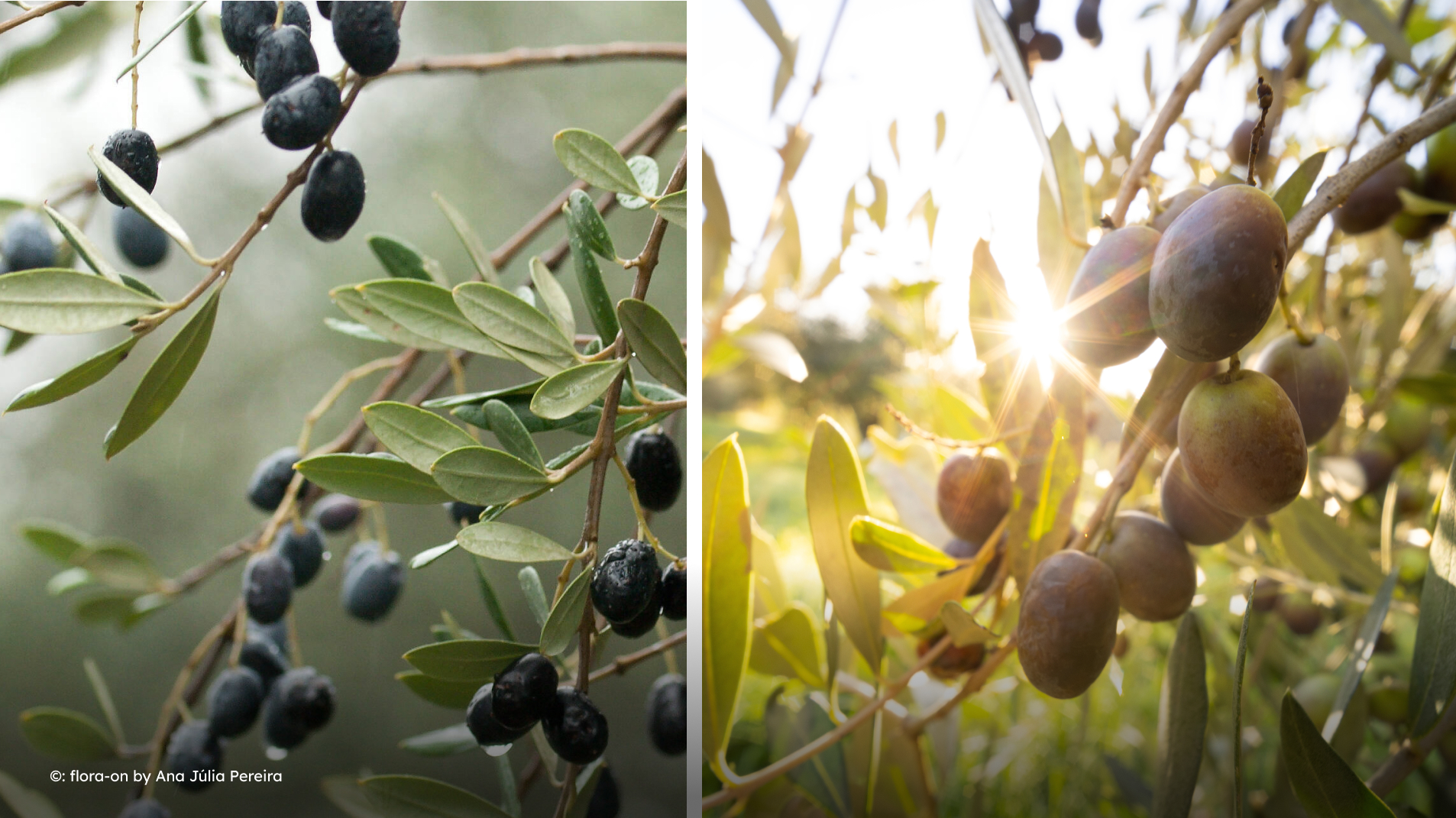
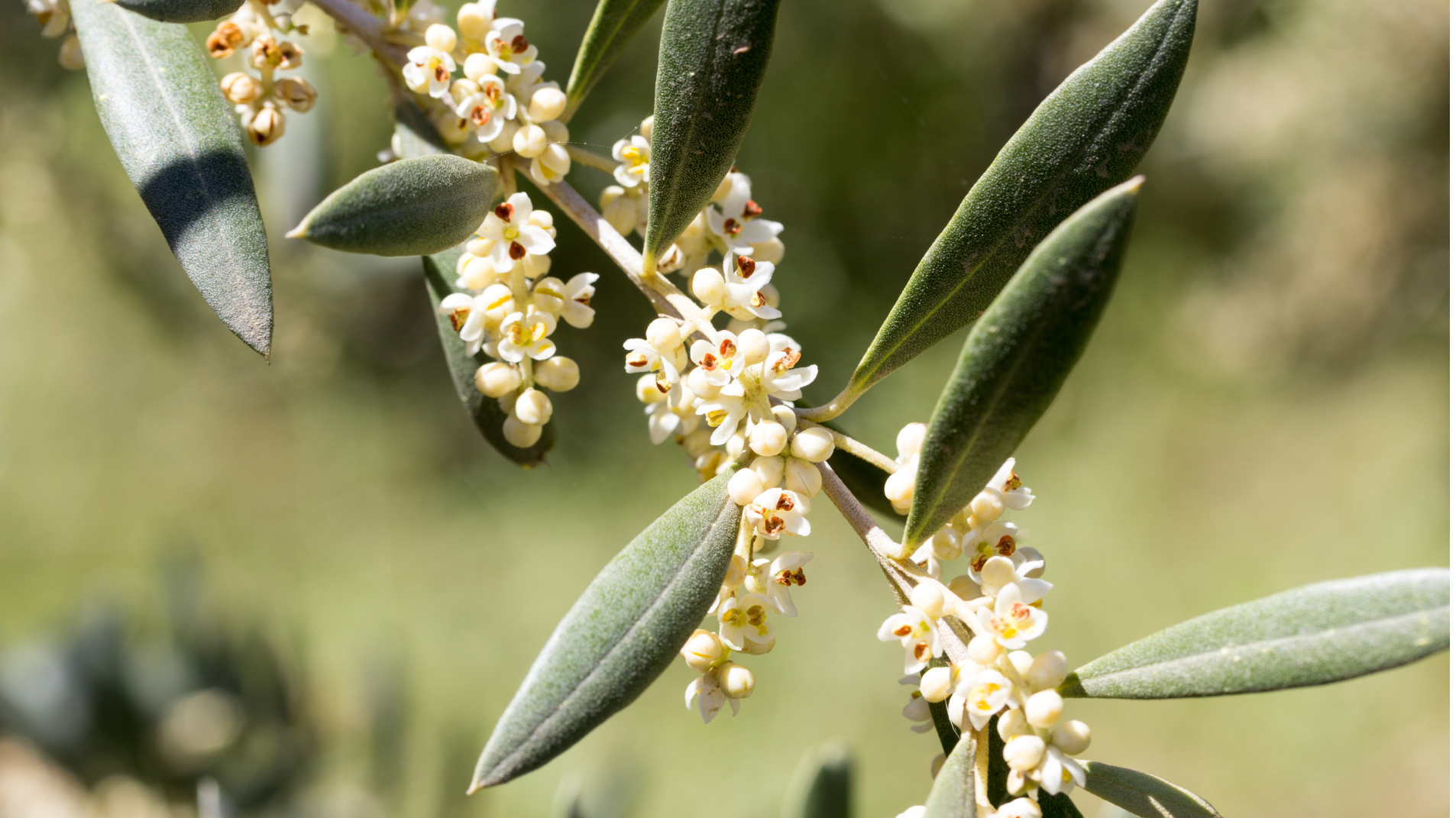
In spring, Olea europaea (both wild and cultivated) emerges from dormancy: new shoots and leaves appear, and flowering develops in panicles of small yellowish flowers, either hermaphrodite or male. Only the former produce fruit, harvested between October and December.
Take note of its soft, slightly sweet fragrance—before, as the song goes, the wind carries the blossom away.
Did you know that…
- The “Olive Tree of Mouchão”, the oldest in Portugal, is located in Mouriscas (Abrantes). It is 3,350 years old, according to a scientific method developed by the University of Trás-os-Montes and Alto Douro (UTAD), and it still bears fruit.
- The name “Oliveira” derives from the Latin oliva, though its origins lie in the Greek elaia or Mycenaean Greek elaiva, meaning oil.
- Olive oil is part of the Mediterranean Diet, recognised as Intangible Cultural Heritage by UNESCO in 2013.
- In Portugal, place names such as Olivais, Azeitão, Oliveira de Frade and Oliveira de Azeméis, as well as the surname “Oliveira” and given names like Olivia, all reflect the cultural importance of this tree.
- Wild olive wood is very dense and resistant; it can be worked and polished and is also a good fuel.
-
Kingdom
Plantae
-
Division
Magnoliophyta (Angiospermae)
-
Class
Magnoliopsida
-
Order
Lamiales
-
Family
Oleaceae
-
Genus
Olea
-
Species
O. europaea
-
Habitat
Wild olive: Mediterranean sclerophyllous forests (such as cork oak and holm oak woodlands), montado systems and dry shrublands, in sunny locations. It typically occurs in poor, rocky soils. Olive tree: The same habitats, but also widely cultivated (traditionally and intensively) in Mediterranean regions, preferably in clay soils. It can occur at higher altitudes than its wild counterpart.
-
Distribution
From the Mediterranean region to the Middle East. In Portugal, it is widespread across the south, centre and the Douro Valley, being common throughout the country. It has also been introduced to the Azores and Madeira archipelagos.
-
Height
The cultivated olive tree can reach 15 metres in height; wild olives are generally smaller.
-
Longevity
They can surpass 3,000 years, although the cultivated olive tree, unlike the wild olive, depends on human intervention.
How do we protect the species?
The Navigator Company identifies areas of conservation interest for this species, managing them to maintain or enhance habitats that provide food, shelter and breeding conditions, while functioning as ecological corridors that facilitate natural dispersal and genetic exchange between populations.
The species occurs in shrubland habitats such as habitat 5330 – Thermo-Mediterranean pre-desert scrub, which in some cases represents a successional stage leading to habitat 9320 (wild olive groves). These habitats are identified within the company’s landholdings and actively conserved to maintain or improve their conservation status.
