

Among Mediterranean scrublands and woodlands of cork oaks and oaks grows an uncommon heather: taller, more robust and steeped in history. White heather is a remarkable example of adaptation and resilience within Portuguese flora.
White heather is one of the most emblematic species of our Mediterranean scrub. Scientifically known as Erica arborea, it can grow as a robust shrub or even as a small tree which, under favourable conditions, easily exceeds 2 metres in height and may reach 7 metres, with a trunk diameter of up to 40 centimetres — a considerable size within the genus Erica. This growth tendency can occur in mountainous regions, such as Madeira Island, where water resources are abundant.
The plant occurs naturally in poor, acidic, well‑drained soils, and is common in scrublands, slopes, and the edges of woodlands dominated by cork oaks and oaks. Its adaptation to demanding environments, combined with a Mediterranean climate, reveals a remarkable resistance to drought and nutrient scarcity.
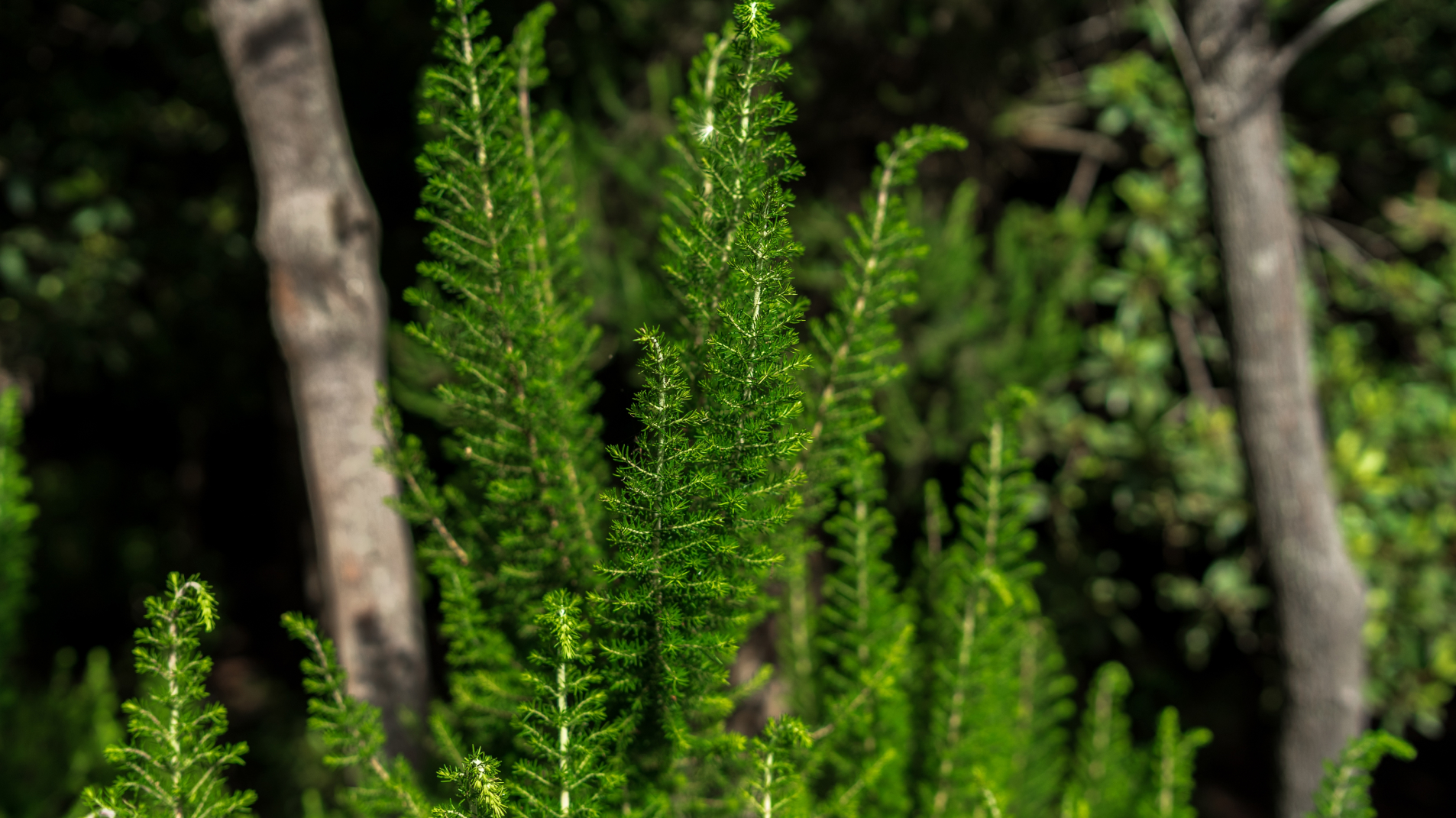
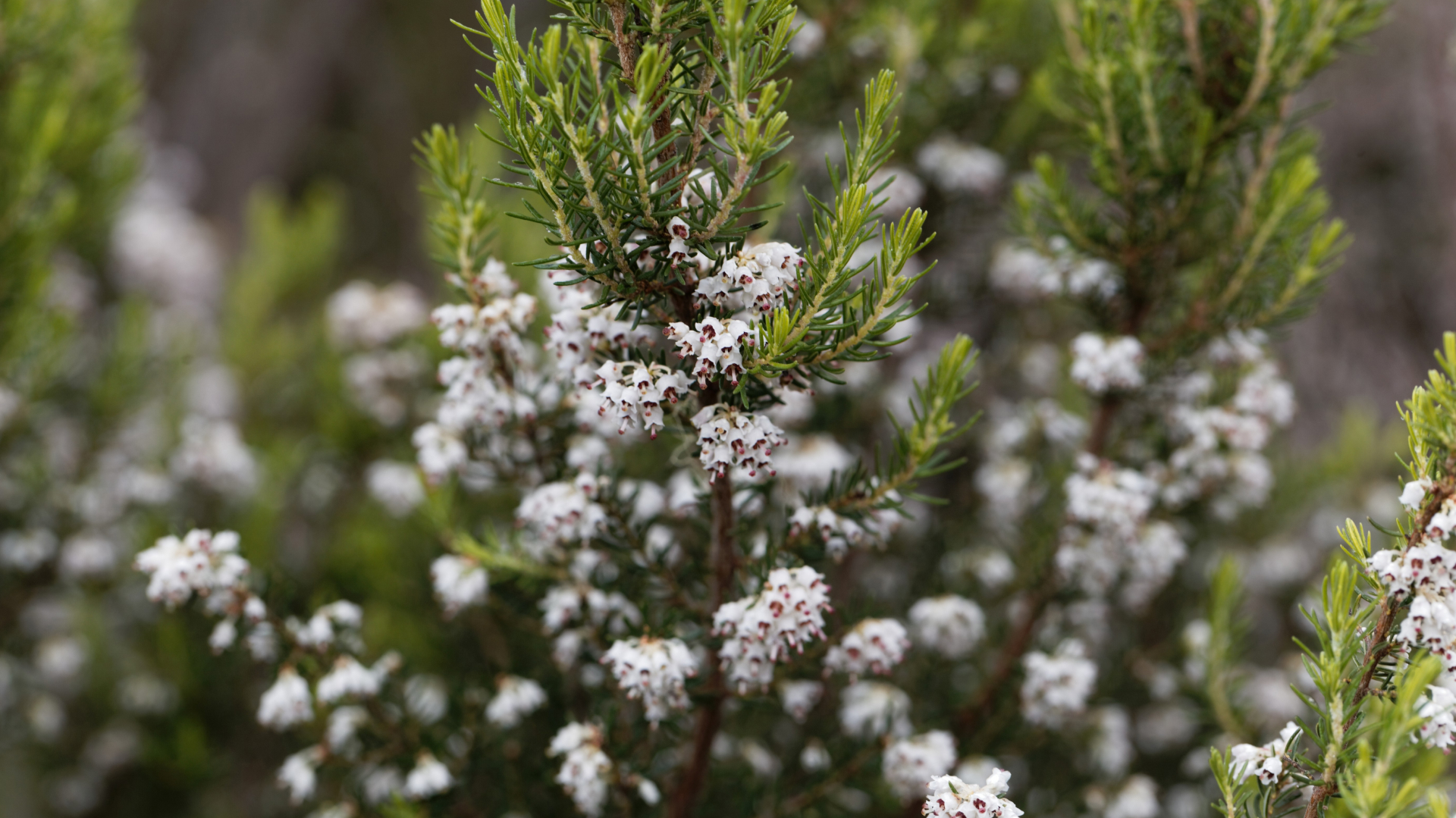
It has short, dense branches, often greyish or almost black, while the stems are covered in fine, woolly hairs. The leaves are narrow, small, evergreen and of a deep green colour, with edges rolled inwards in such a way that the inner surface is barely visible. All these characteristics help minimise water loss.
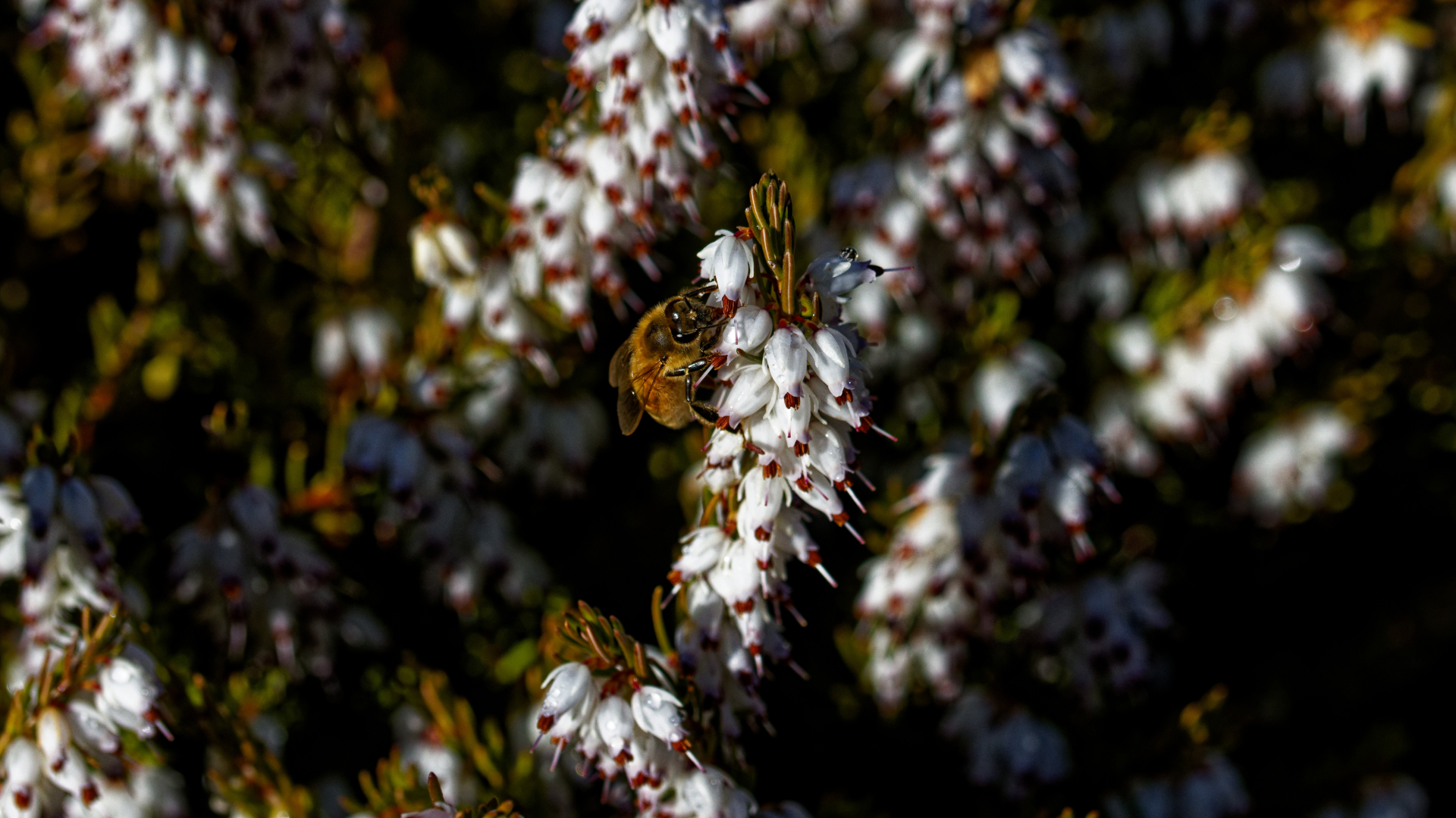
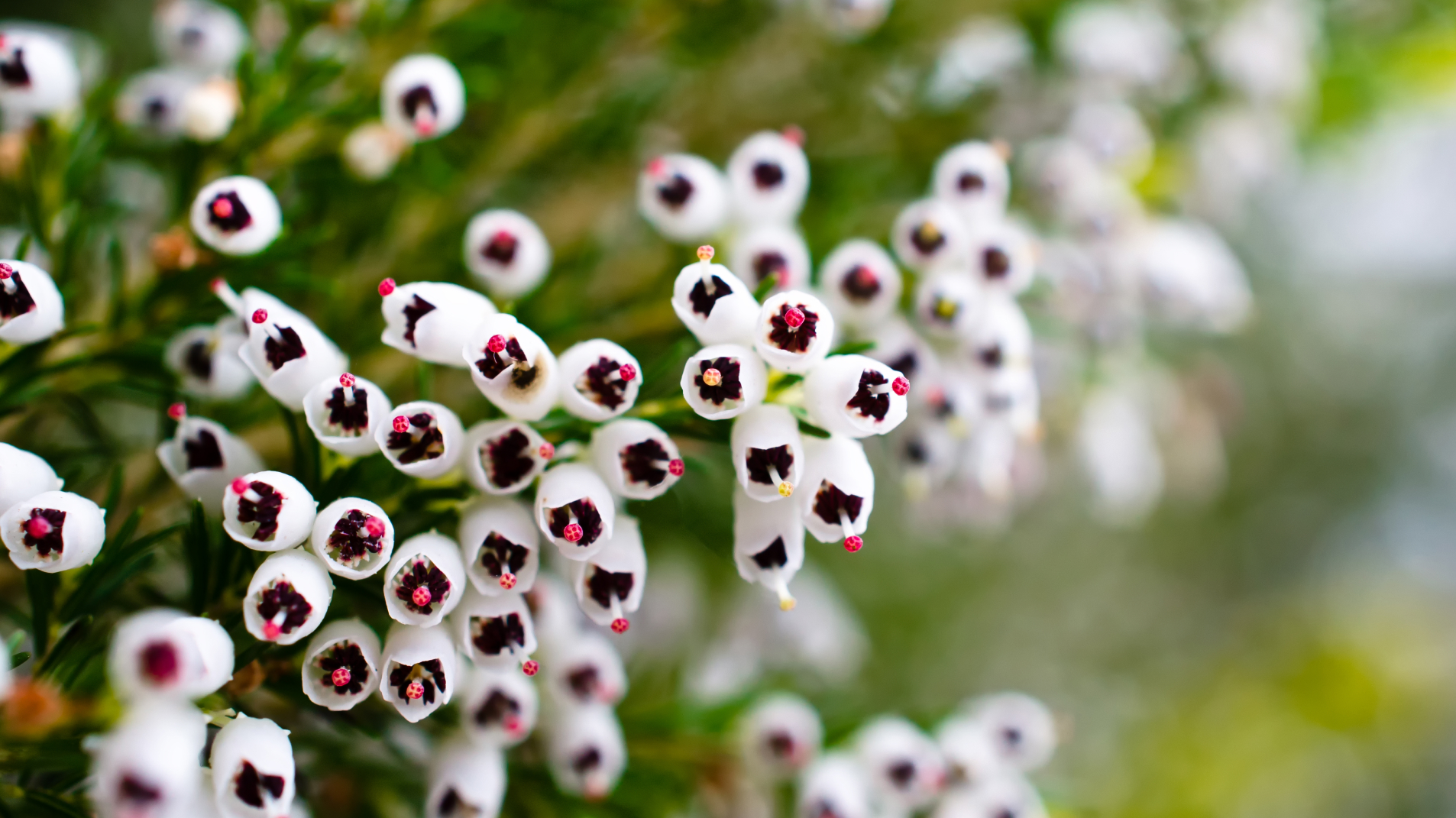
Flowering generally occurs from late winter through spring. The bell‑shaped flowers are white or slightly pinkish and grouped in fragrant clusters, which are highly attractive to pollinating insects, especially bees.
This floral shape helps distinguish white heather (Erica arborea) from the similar species E. lusitanica, which has a smaller stigma.