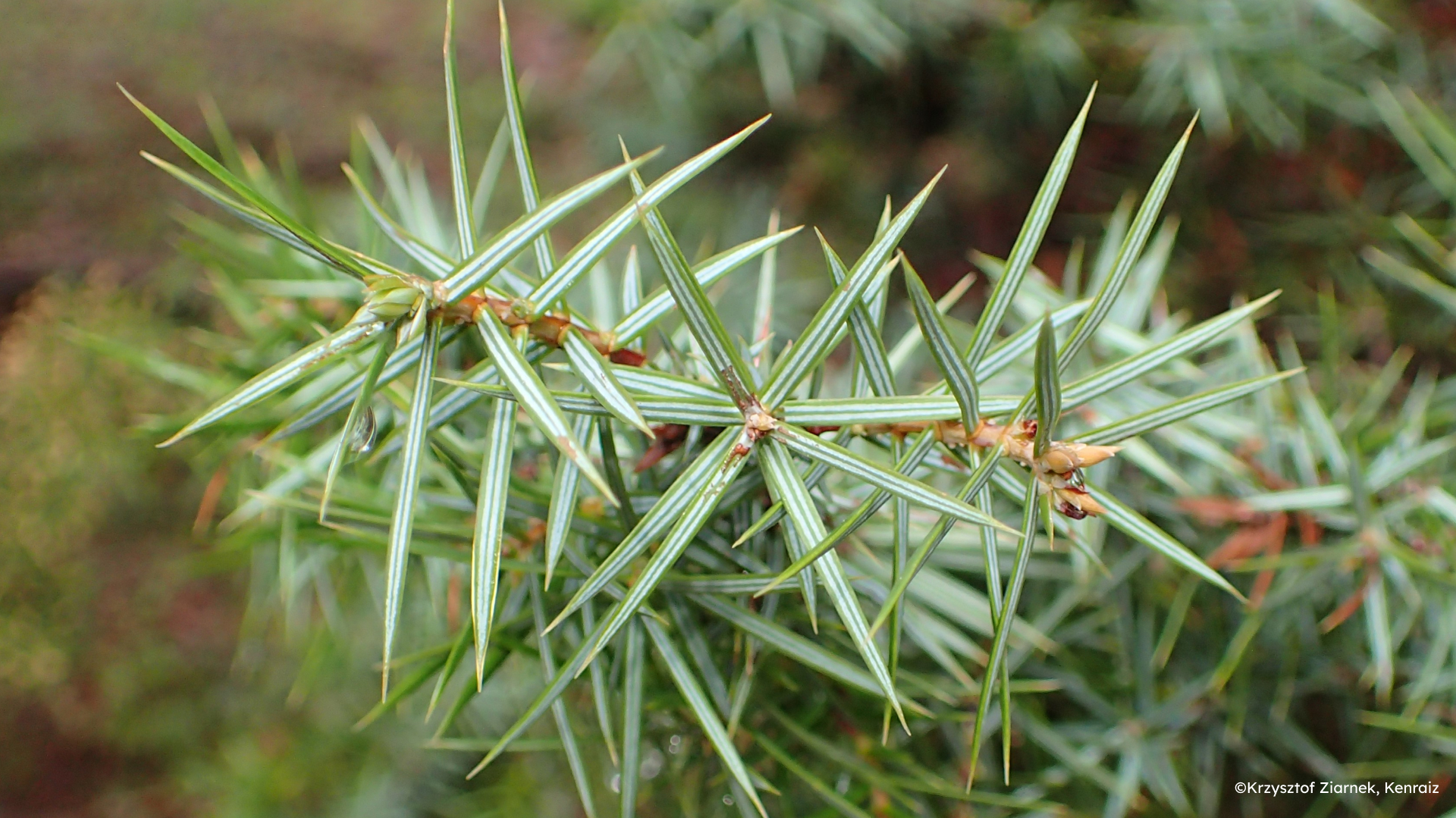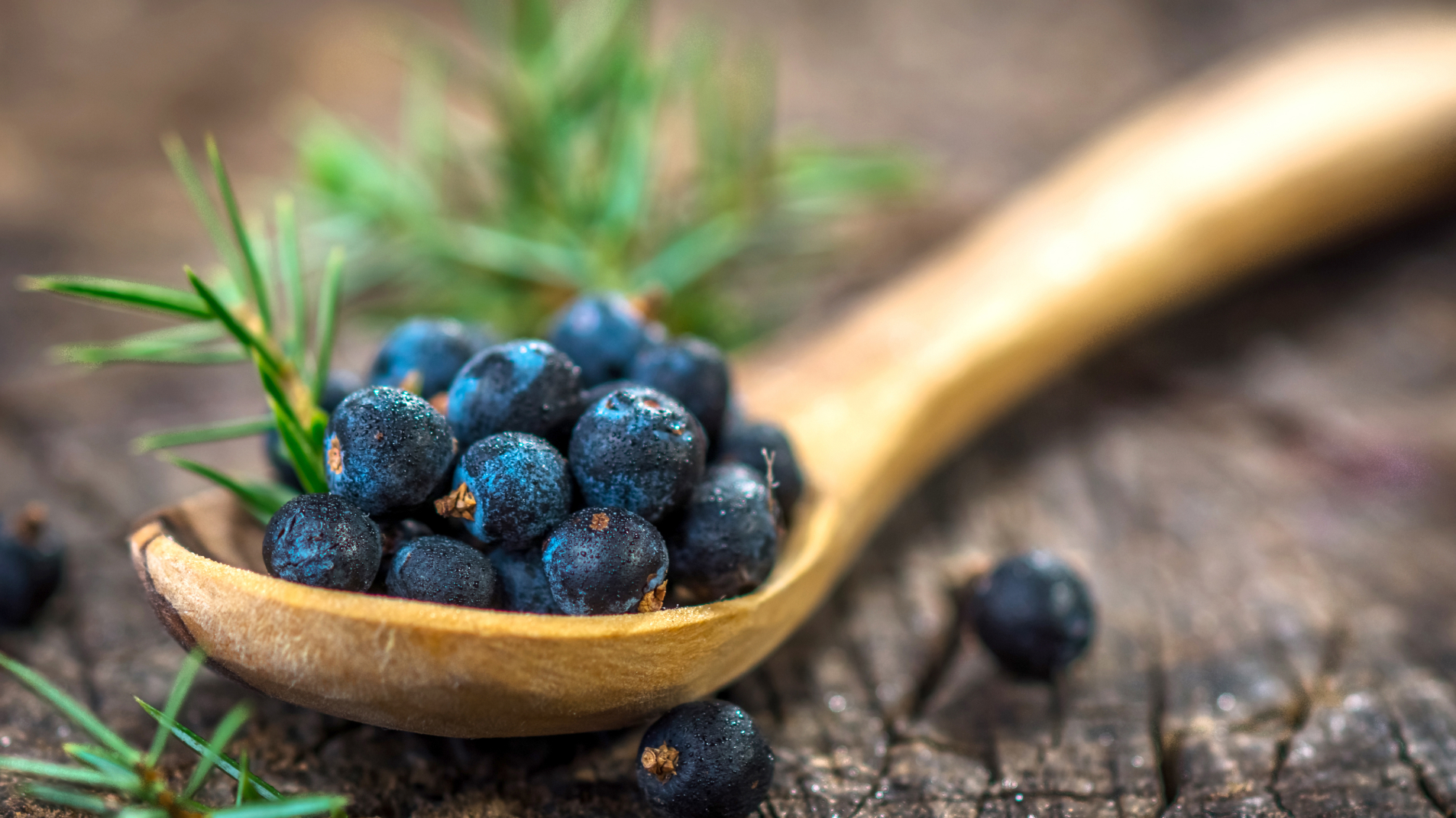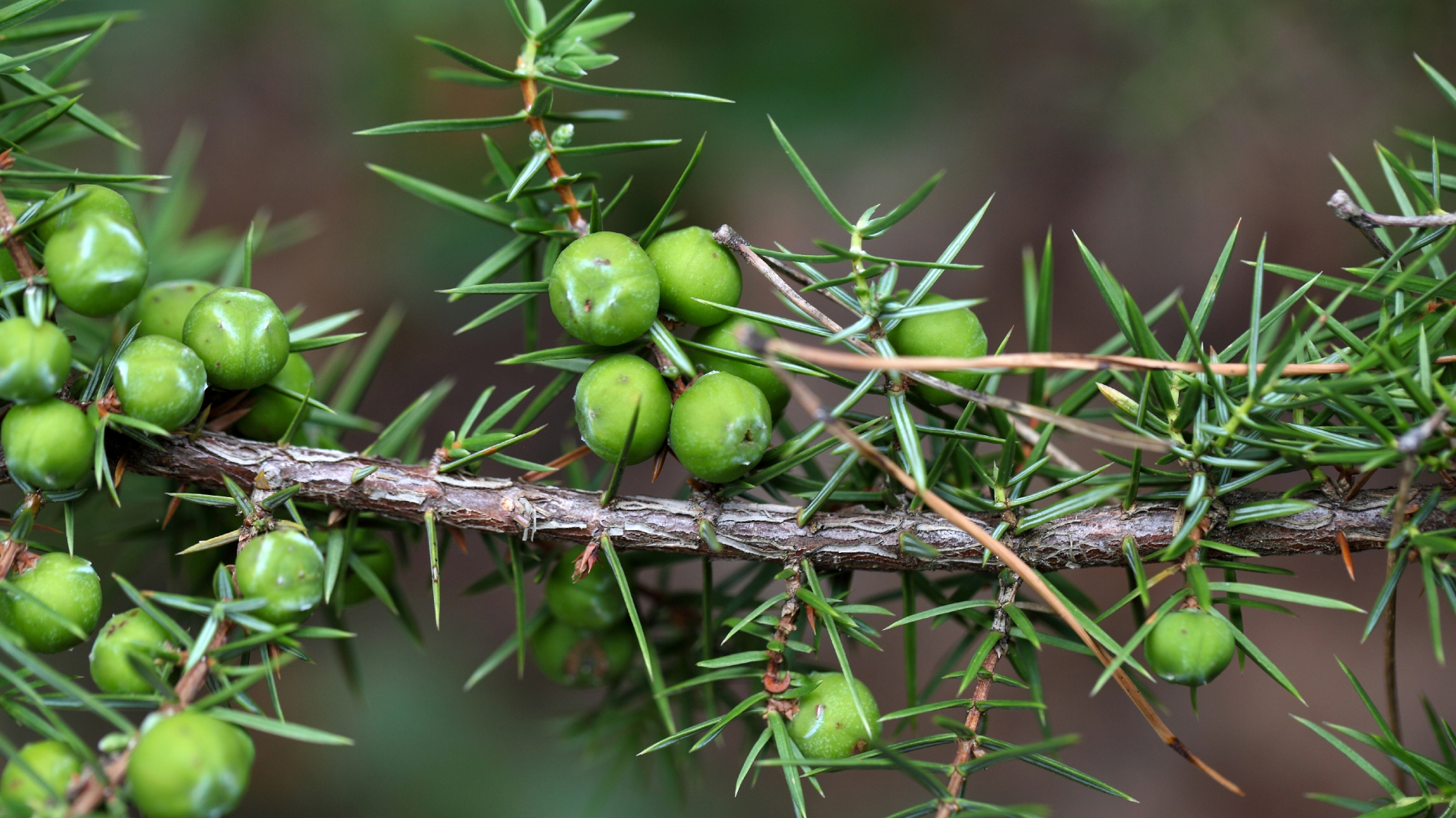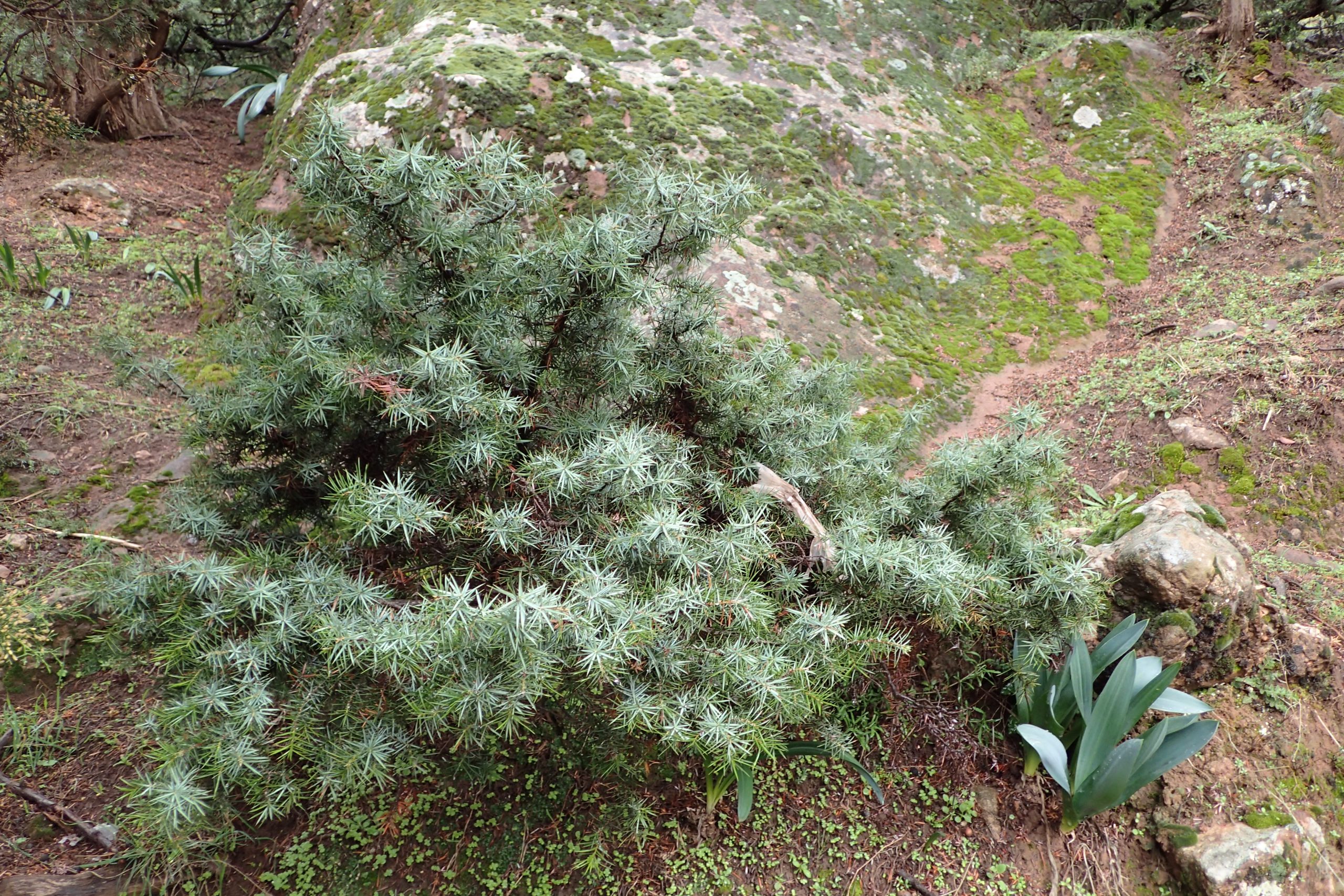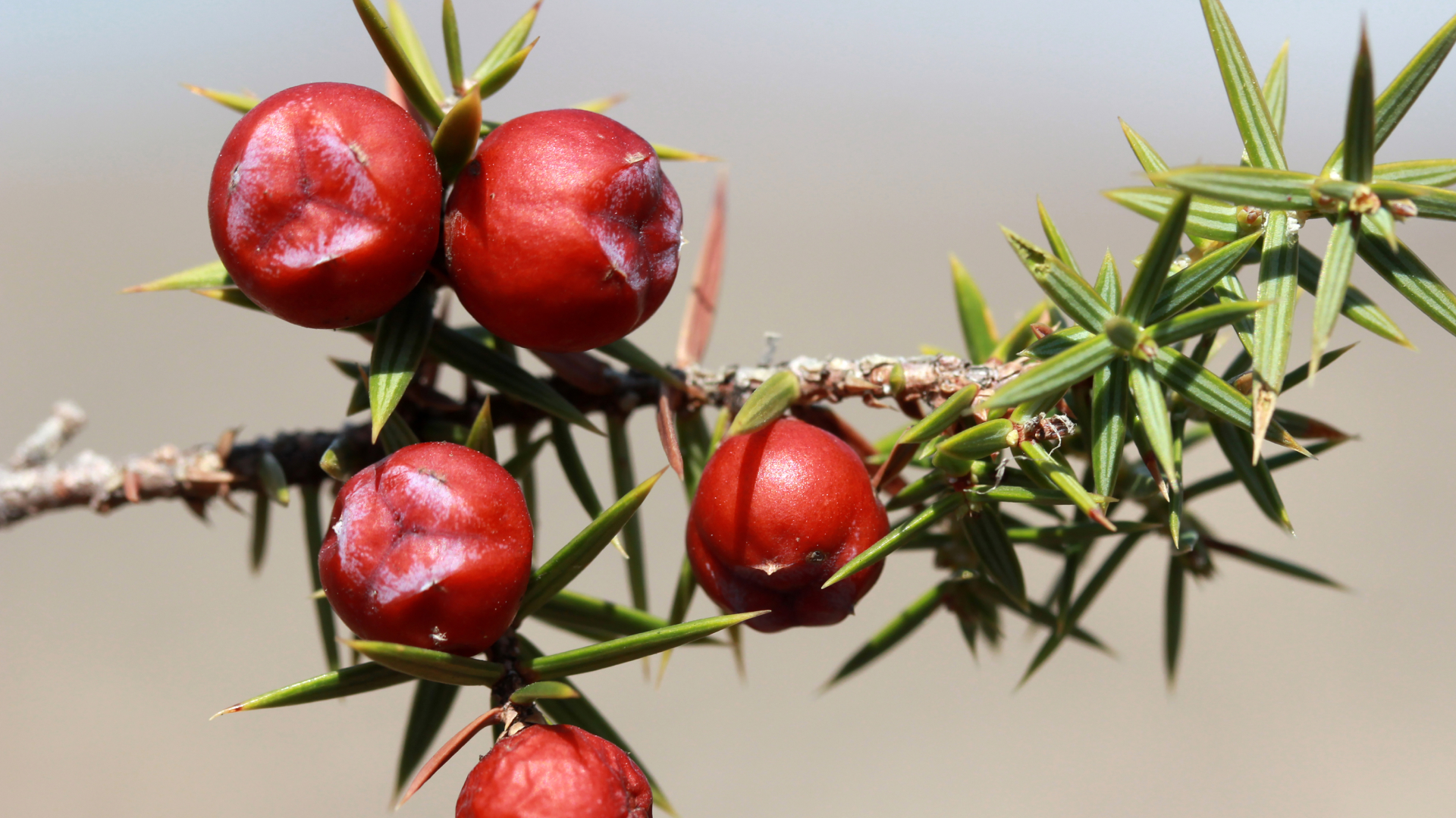


Resistant to drought, wind and nutrient-poor soils, the prickly juniper (Juniperus oxycedrus) is one of the species that best reflects the resilience of Mediterranean ecosystems. This conifer holds a long history of adaptation, ecological balance and deep connection to the territory. Come and discover it.
Growing in open scrublands, forest clearings and impoverished soils, Juniperus oxycedrus is a robust, often overlooked shrub that climbs rocky slopes from the upper Tagus region to the northeast of Trás‑os‑Montes. Its ability to survive under harsh conditions — scarce water, intense sunlight, shallow soils — makes it a structuring species in fragile or recovering Mediterranean landscapes, where it is often among the first signs of natural regeneration.
Also known as cade juniper, Spanish cedar, prickly juniper or oxycedar, it is a small, aromatic and striking tree that remains surprisingly little known. Although globally classified as “Least Concern”, the species already shows signs of decline due mainly to the closure of traditional mosaic landscapes, the loss of open areas and limited natural regeneration.