Where it lives and what it eats
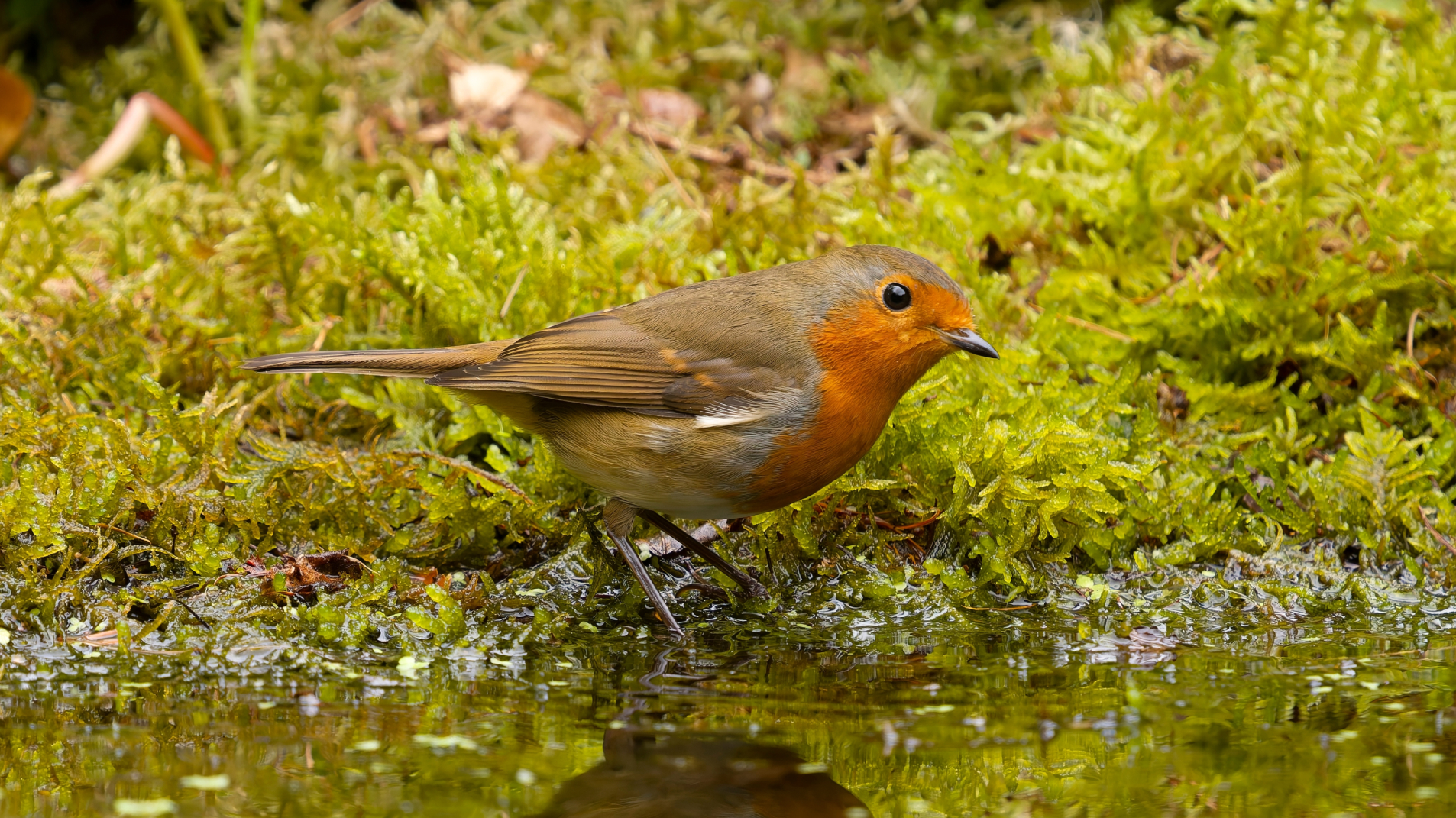
In Portugal, the European robin can be observed throughout most of the year in woodlands, parks, orchards and gardens, particularly in areas with dense vegetation and some moisture. It favours places that provide shelter close to the ground, where it can find both food and protection. Although commonly associated with forests, it adapts remarkably well to human presence, making it one of the easiest wild birds to observe.
Its diet consists mainly of small invertebrates, including insects, spiders, larvae and earthworms, giving it a subtle yet important role in maintaining the ecological balance of these habitats. During autumn and winter, it supplements its diet with berries and small fruits, demonstrating a remarkable capacity to adapt to seasonal changes.
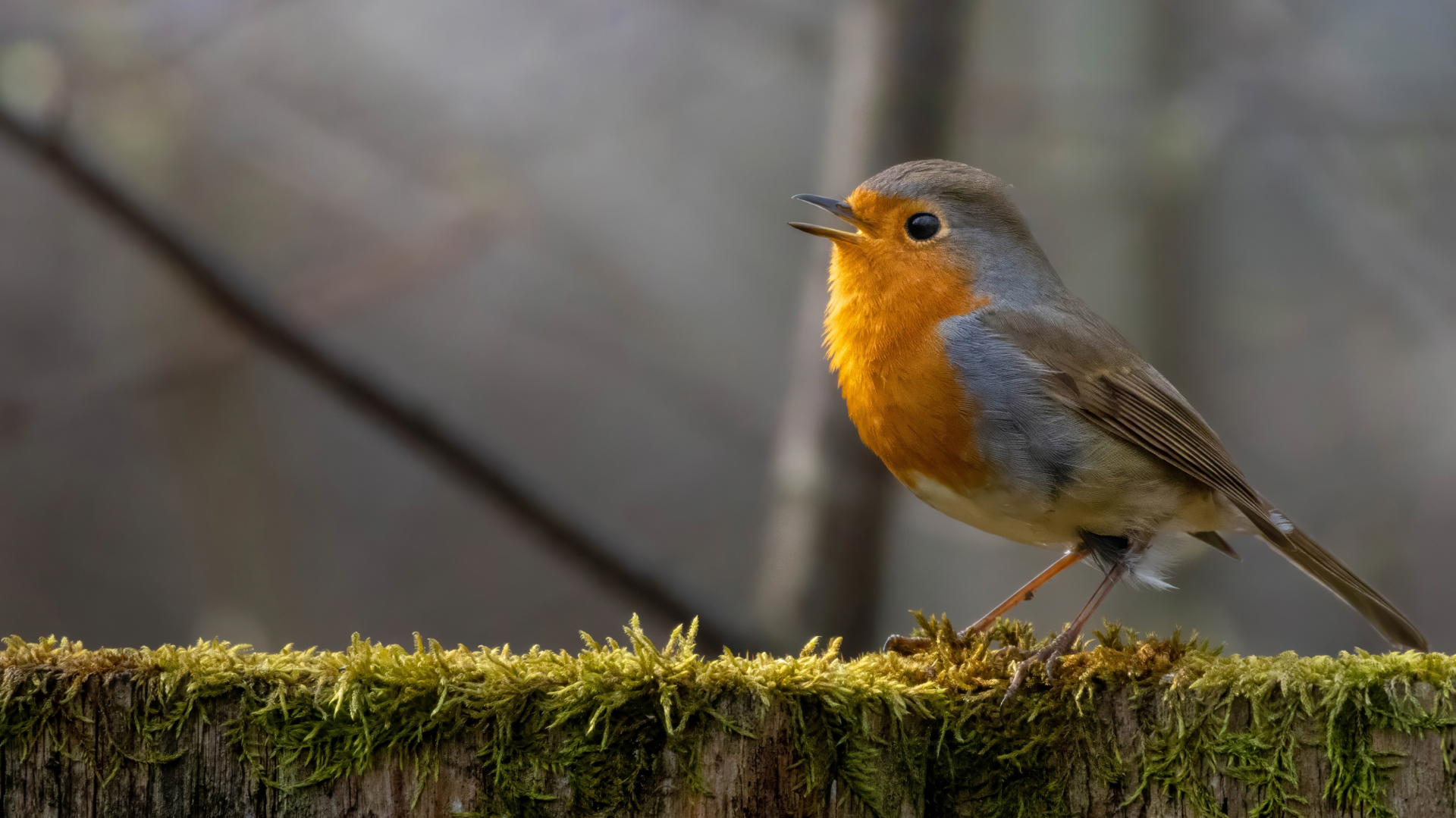
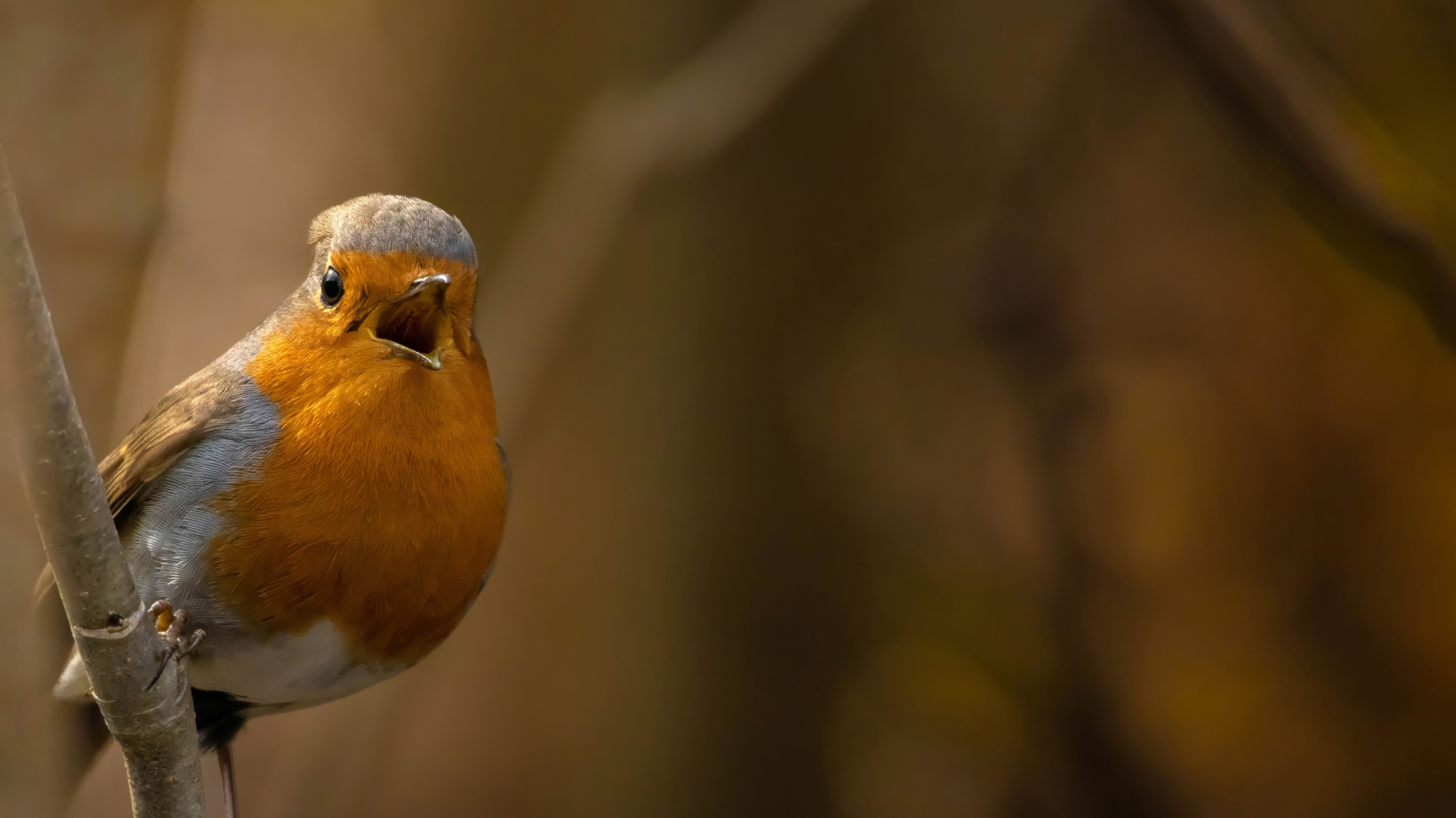
Spring marks one of the most important periods in the robin’s annual cycle: the breeding season. At this time, males become particularly vocal, using their song to defend territories and attract mates. Their song is delicate, fluid and surprisingly powerful for such a small bird. In fact, it is often easier to hear a robin than to spot it among dense vegetation. During the early hours of the morning, while the forest is still waking up, its song is often among the first sounds to break the silence.
Robin nests are usually built in sheltered cavities among roots, walls, hollow trunks or even unexpected locations created by human activity. Perhaps it is this closeness to our everyday world that makes the species so appealing.
The nest itself is a neat cup-shaped structure made from dry leaves, moss and other plant materials, carefully lined with soft hair and feathers. The female typically lays one egg per day, usually in the early morning, over a period of four to six days. During this stage, the male plays an important role by feeding her several times a day.
Once the clutch is complete, the female incubates the eggs for around 13 days. The chicks hatch featherless, blind and entirely dependent on their parents. After about a week they can fully open their eyes, and by around ten days of age most of their body is covered with feathers. Flight feathers are the last to develop, which means that when young robins leave the nest at approximately 14 days old, they are still unable to fly properly. They continue to receive food and protection from their parents for another three weeks until they become independent.
The male is largely responsible for protecting and feeding the fledglings while the female prepares a new clutch. This division of responsibilities allows European robins to raise three to four broods per year.
From persecution to protection
In Portugal, robins were historically captured for consumption and frequently targeted by hunting and illegal trapping. Decades of persecution have left a mark on the species’ behaviour, helping to explain why robins in Portugal are generally more wary and difficult to approach than those found, for example, in the United Kingdom.
To help combat these practices, SPEA has collaborated with national authorities and the Spanish Ornithological Society (SEO/BirdLife) to strengthen the prevention and monitoring of illegal hunting through initiatives such as the LIFE Nature Guardians project.
Erithacus rubecula is more than just a beautiful bird. It serves as a living reminder that biodiversity does not exist only in remote nature reserves or wildlife documentaries. Often, it can be found just a few metres away, quietly watching from a branch, with its fiery orange breast and surprising confidence. The European robin continues to find subtle, and highly photogenic, ways of capturing our attention.
How do we protect this species?
The European robin has already been recorded on 109 Navigator properties, including breeding records in several areas in southern Portugal. It was also identified within the two estates that form part of the National Bird Sanctuary Network, , an initiative promoted by SPEA.
Areas of conservation interest are designated and managed to maintain or improve habitats that provide suitable feeding, shelter and breeding conditions. These areas can also function as ecological corridors, facilitating the natural dispersal of species and promoting genetic exchange between populations.