Biogallery

Biohistory

Broom Heath, or a primitive broom

Ever since humans adopted a settled way of life, they have sought ways to improve the places they call home. No one knows when the first person looked to nature in search of materials for a cleaning tool, but nature provided a solution. Several plant species still carry that practical legacy in their common and scientific names. One of them is broom heath (Erica scoparia subsp. scoparia), a remarkable shrub we are about to discover.


The broom is one of humanity’s oldest inventions. The earliest known versions date back to ancient Mesopotamia around 4000 BC. Even then, people understood that an effective natural broom required long, flexible, durable branches. The design remained largely unchanged for centuries, consisting of bundles of tied twigs that were only later fitted with a handle. Broom heath, also known in Portuguese as vassoura, likely owes its name to this traditional use.

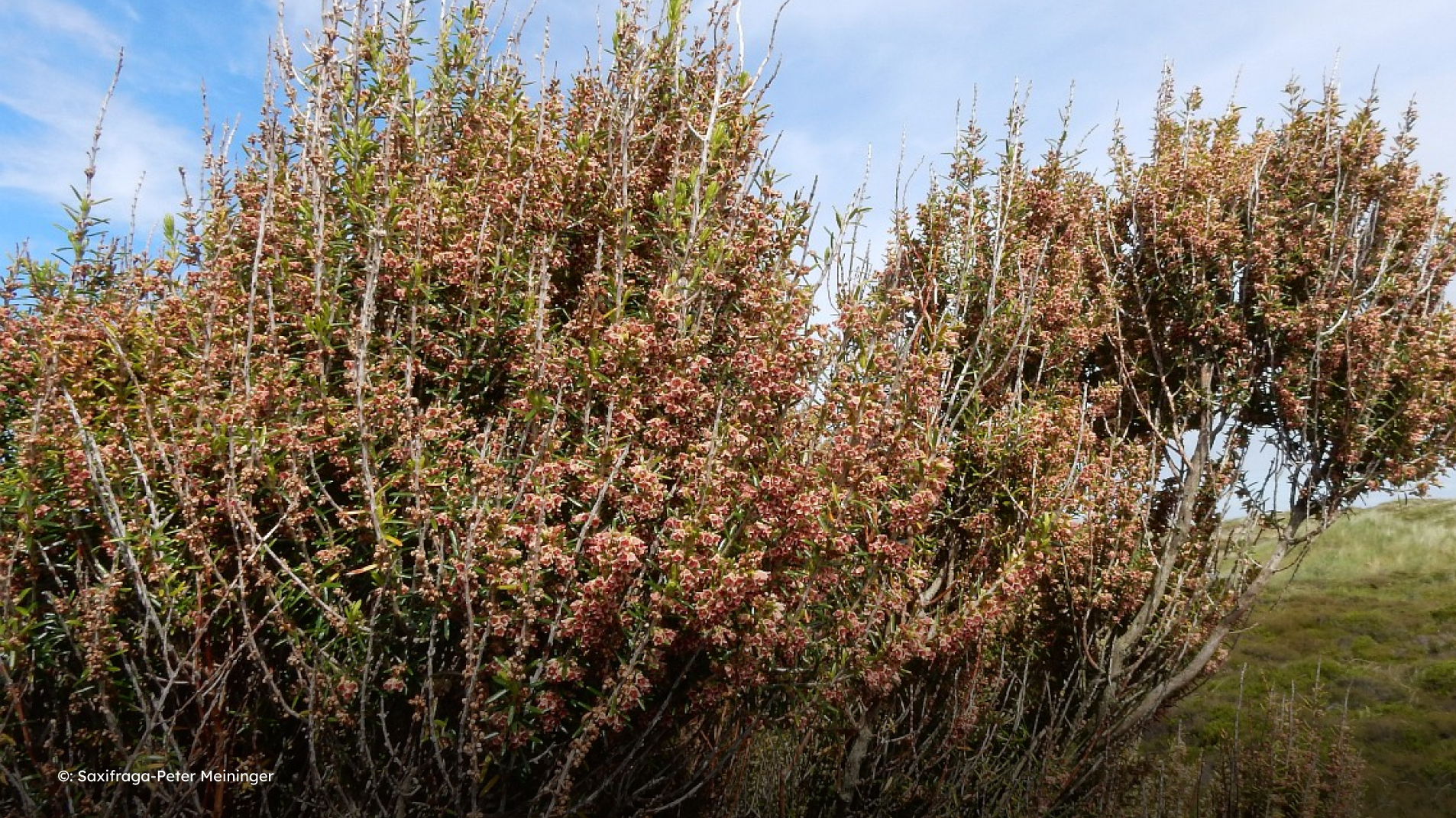
Its scientific name tells the same story. The Latin root scopa, from which scoparius is derived, means “broom” or “brush”. Unlike many other heaths, which are generally small and low-growing, broom heath is a dense shrub that can reach up to 2.5 metres in height, with upright branches that give it a distinctive appearance.

To the untrained eye, broom heath can be difficult to identify at first glance. Its leaves are similar to those of other heath species: narrow, evergreen, glossy green and arranged in whorls of up to four leaves at the same level along the stem. They measure between four and six millimetres in length. The branches, however, provide useful clues. In this species, the stems are smooth and hairless, while the trunks range from light brown to greyish in colour.
Broom heath: a charming name for a delicate flower

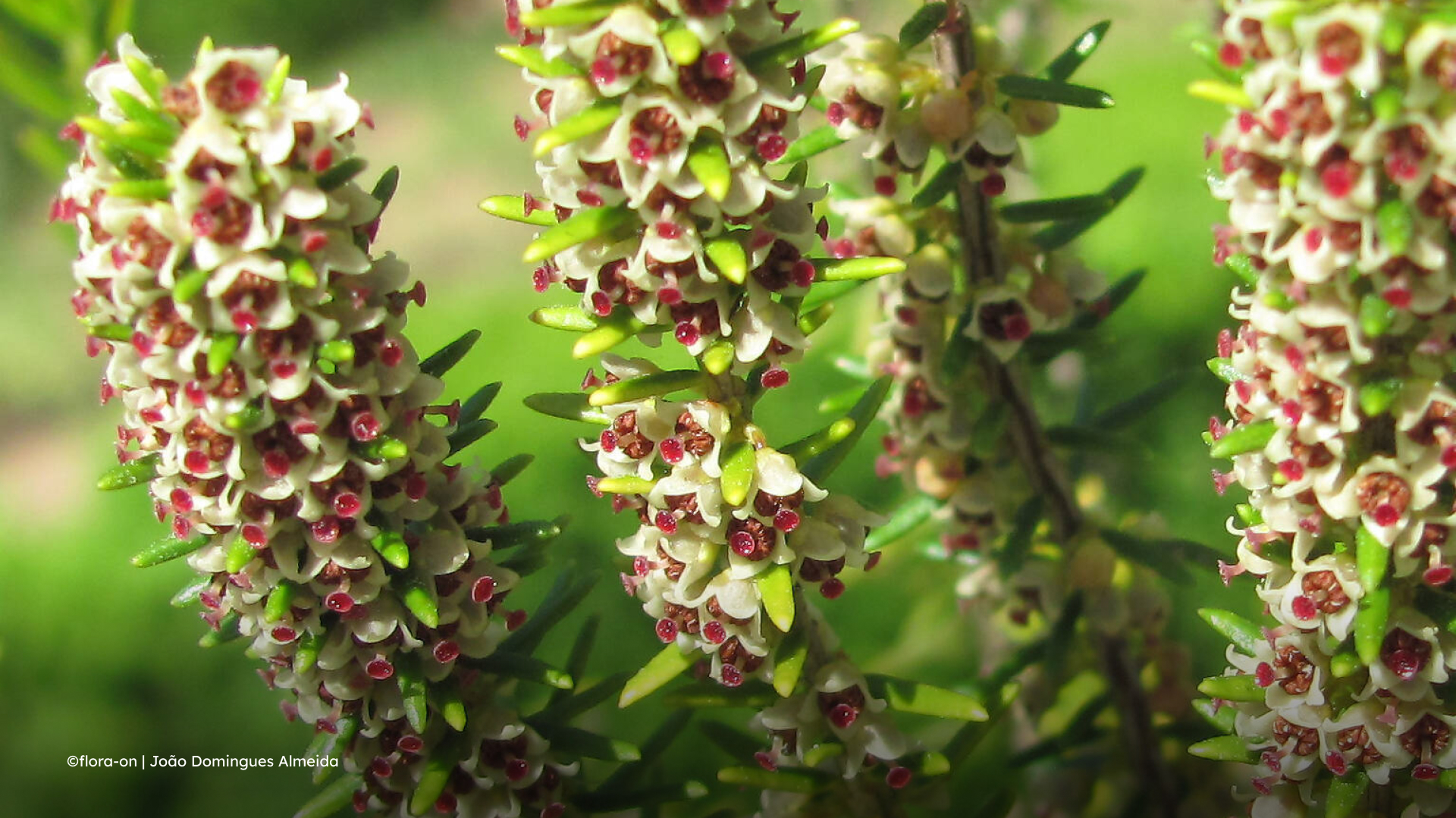
The flowers are perhaps its most distinctive feature. Tiny bell-shaped blooms, measuring no more than 2.5 millimetres in diameter, display a subtle greenish colour and cluster together in elegant inflorescences along the branches. Each flower is hermaphroditic, containing both male and female reproductive organs, and relies on insects for pollination.

The pinkish hue often visible in photographs comes from the stigma, a disc-shaped structure that develops from the ovary and turns pink as it matures. Although beautiful, the display is brief, as the flowering period typically lasts from April to May.

The fruits are small capsules divided into four sections, while the oval-shaped seeds measure just 0.4 to 0.6 millimetres.

As the plant ages, its wood can be used as fuel for ovens and stoves. There are also records of its lignotubers, woody swellings at the base of the stem, being used to produce small handcrafted objects. Like the wood of white heath (Erica arborea), it has traditionally been valued for pipe-making because of its ability to withstand heat without becoming excessively hot on the outside.

Broom heath is distributed across southern Europe, from Portugal to Italy, as well as North Africa. In mainland Portugal it occurs naturally throughout much of the country. Related endemic subspecies are found in the archipelagos of Madeira and the Azores: Erica scoparia subsp. maderincola and Erica scoparia subsp. azorica.

The species occupies a wide variety of habitats, including scrublands, woodland edges and coastal sandy areas, generally favouring moist soils.

It is also included in Portugal’s Natura 2000 Sector Plan through Habitat 5330pt4, Thermo-Mediterranean pre-desert scrubland with Quercus lusitanica, listed under Annex I of the Habitats Directive.

Did you know…

  • The European fan palm (Chamaerops humilis), narrow-leaved groundsel tree (Baccharis spicata), rigid brome (Bromus rigidus) and Scotch broom (Cytisus scoparius) are among several plant species whose common names retain a reference to the traditional broom;
  • Portugal has two endemic heath species, one in each archipelago: Erica azorica in the Azores and Erica platycodon maderincola in Madeira. Both produce attractive reddish flowers;
  • In Portuguese folk medicine, broom heath was traditionally believed to possess cleansing and diuretic properties and was often used in remedies associated with urinary health.

Temas: