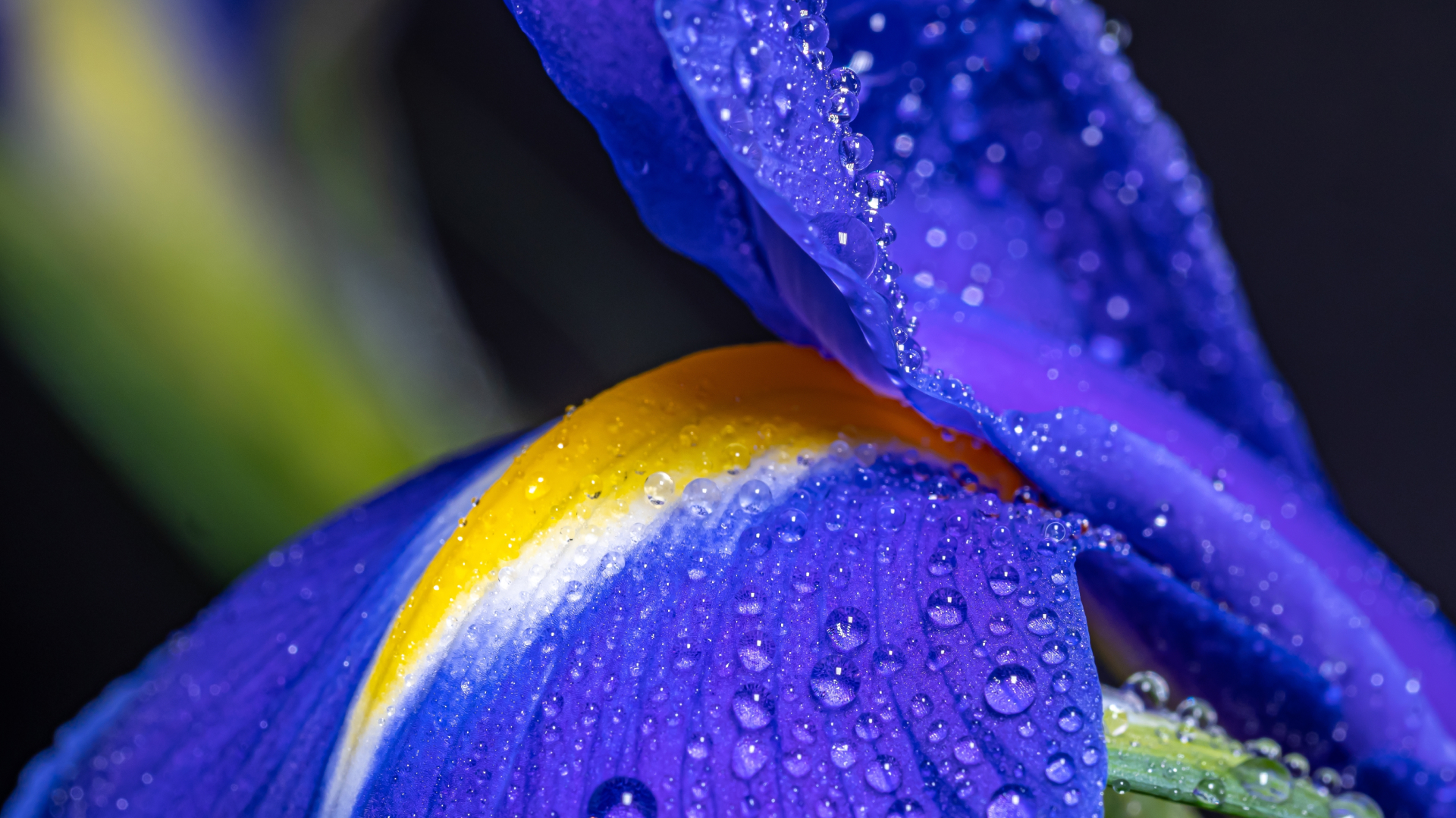


The natural wonder we are highlighting today is the beautiful May Iris, also known in Portugal as maios and scientifically named Iris xiphium. Its striking blue-violet blooms inspire the imagination, evoking unexpected colour palettes and a beauty that seems almost otherworldly, as though it had arrived from a distant future beyond our own planet.
Imprima ou partilhe nas suas redes sociais:
Iris xiphium, known in some regions as maios, is a spring-flowering bulbous plant native to Mediterranean environments, including Portugal. With its intensely blue petals and distinctive yellow markings, this species stands out not only for its ecological importance but also for its ability to transform ordinary landscapes into scenes of remarkable beauty.
Bridging the worlds of botany and contemplation, it is a wildflower that commands attention with quiet elegance, as if nature itself had chosen to paint the wind.
Delicate beauty
Belonging to the Iridaceae family, the May Iris (Iris xiphium) is a perennial plant of Mediterranean origin. It is a bulbous species, meaning it survives through an underground bulb that allows it to regenerate and flower year after year under the right conditions. May irises are often described as vigorous plants, reaching heights of between 25 and 90 centimetres.
Their leaves are long, narrow and green, emerging from a clearly defined stem. They can measure anywhere from 30 centimetres to one metre in length and up to eight millimetres in width, typically appearing from October onwards.
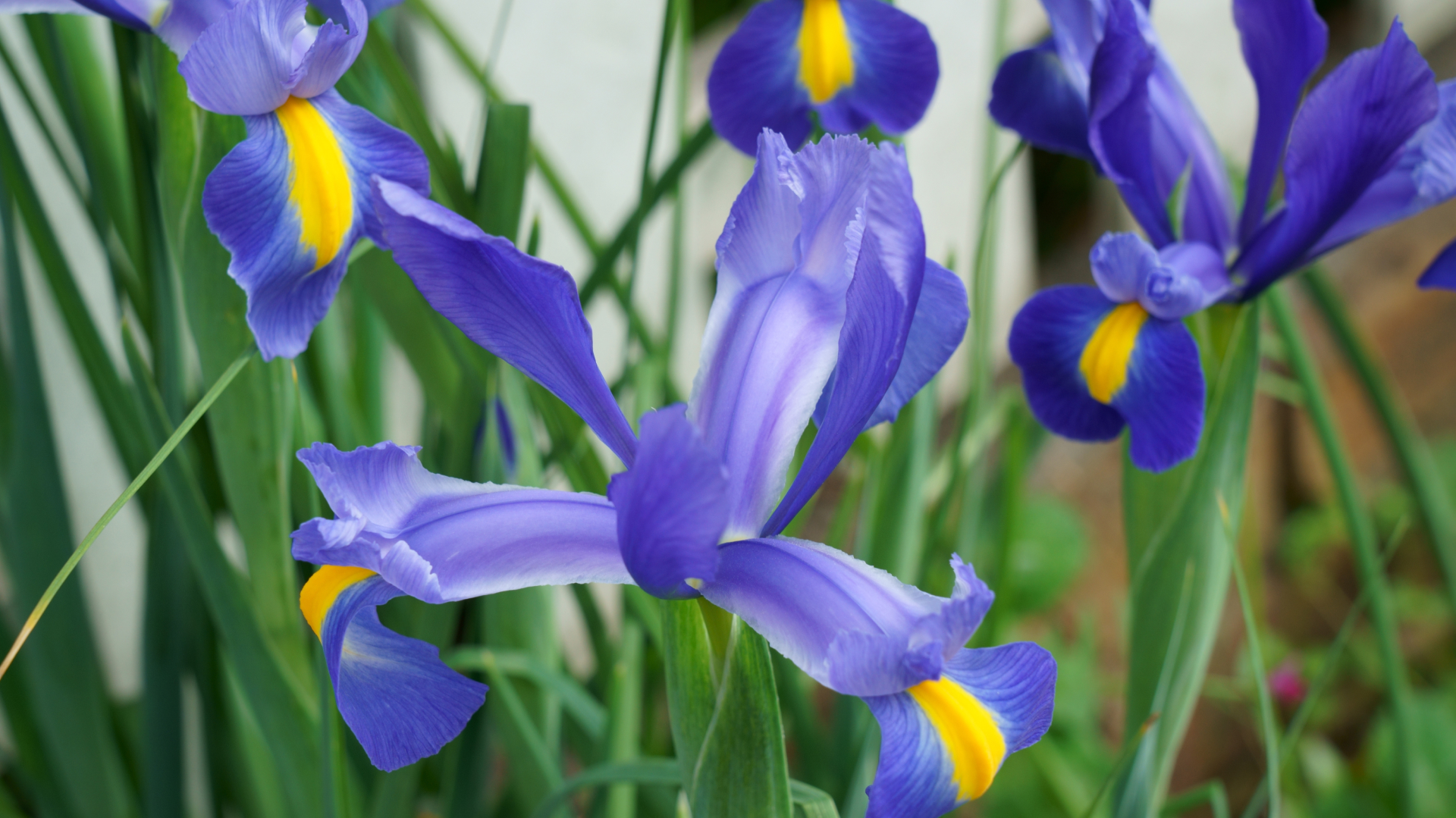
Each stem can produce one or two flowers, and occasionally three. The flowers may reach up to ten centimetres in diameter and are composed of six colourful segments: three inner petals displaying rich violet-purple tones and three outer tepals marked with bright yellow patches. These outer segments are elongated and broaden towards the tip, giving the flower its distinctive shape.
The flowering period of Iris xiphium generally occurs between April and June, coinciding with the transition from spring to summer, when daylight intensifies and Mediterranean ecosystems enter one of their most active biological phases.
The species is particularly admired for the striking blue-violet colour of its petals, often compared to natural watercolours. The vivid yellow centre creates a dramatic contrast, helping to attract pollinators while reinforcing the flower’s ecological role. Well adapted to dry climates and well-drained soils, the May Iris is perfectly suited to Mediterranean environments.
And if its colour alone is enough to catch the eye, its distribution is equally impressive. The species is found throughout Portugal, from north to south, and also occurs in other Mediterranean regions, including Spain, France, Italy, Algeria, Tunisia and Morocco. In Portugal, it is most commonly found in woodlands, scrubland and other areas with a mild climate, particularly across the central region and along the coast.
The “portuguese cousin” and a changing landscape
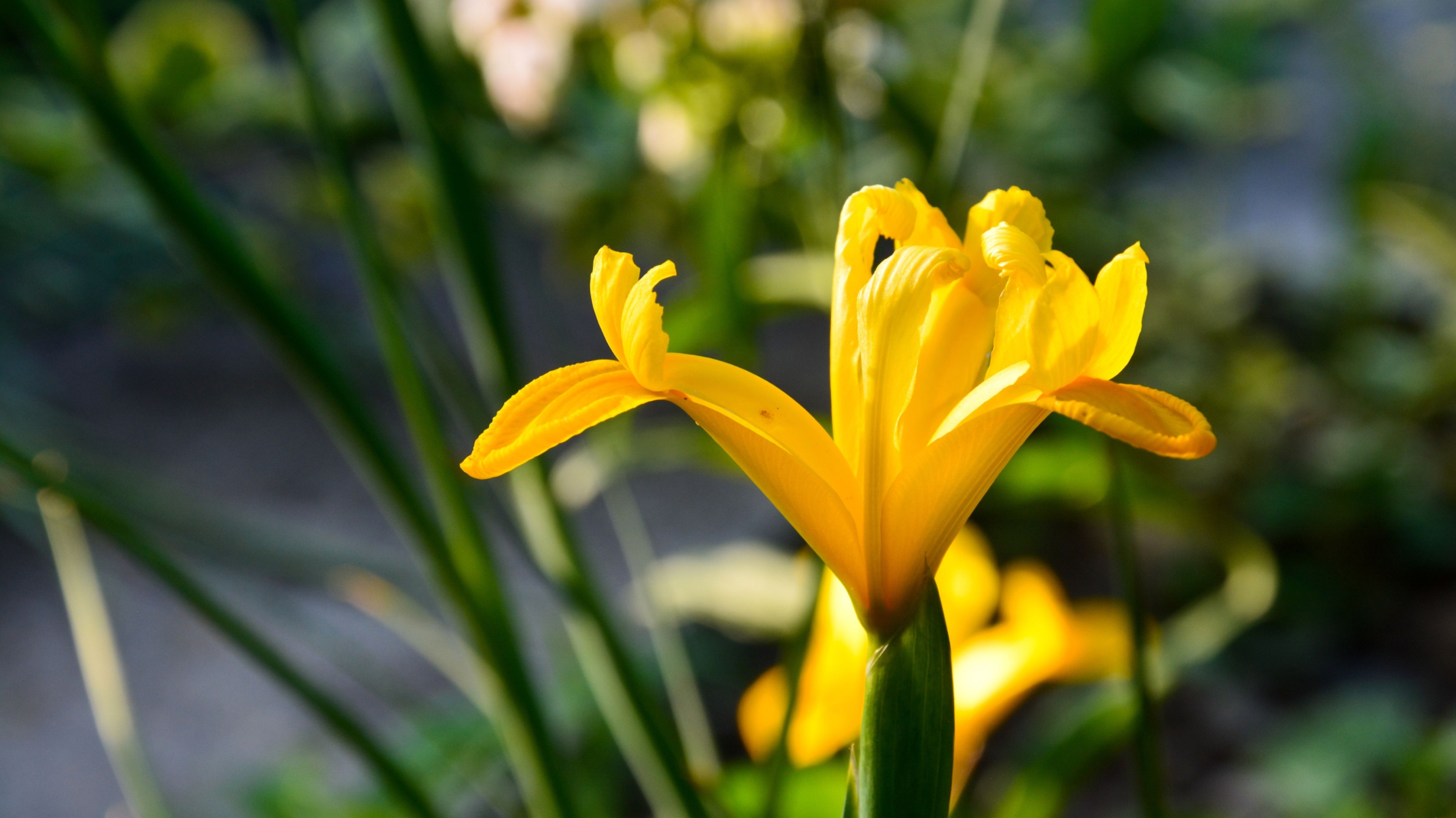
In Portugal, a distinct variety known as Iris xiphium var. lusitanica (pictured above) can also be found. Endemic to the Iberian Peninsula, it is protected under Annex V of the Habitats Directive, which includes plant species of Community interest whose collection from the wild and exploitation may be subject to management measures.
This diversity within the same genus highlights the remarkable ability of these plants to adapt to the different microclimates found across the Iberian Peninsula.
Its Portuguese relative presents a very different appearance, evoking the image of a radiant sun. Its striking yellow petals, reminiscent of sun rays, seem to dance in the breeze, heralding the arrival of summer.
Yet Iris xiphium is more than simply a beautiful wildflower. It is a species that brings together science, ecology and aesthetics, reminding us that biodiversity is not merely a catalogue of species, Perhaps that is what makes it so difficult to overlook. Despite its modest size, it has the power to transform the way we see a landscape, encouraging us to pause, observe and appreciate the extraordinary details hidden within nature.
Did you know?
- The Iridaceae family is distributed throughout the world and is considered a horticultural treasure by true lovers of natural beauty. Whether in urban gardens or floral bouquets, plants from this family are part of floral arrangements that never go out of style, including the genera Iris, Freesia, Gladiolus, Tigridia, Crocosmia, Sparaxis and Ixia. There are around 250 species within the genus Iris, distributed across various regions of the world. As a result, Iris xiphium is often confused with other European wild iris species.
- Some species are used in traditional medicine and perfumery.
- Its name is associated with historical and symbolic references linked to light and the rainbow.
How do we protect this species?
- Iris xiphium can be found on properties managed by The Navigator Company in central Portugal.As with other plant species, areas of conservation interest are identified and designated for its protection. These areas are managed in a way that preserves or enhances the habitats where the species occurs, promoting its natural dispersal and encouraging genetic exchange between different populations
-
May Iris
Iris xiphium var. xiphium
-
GENUS
Iris
-
FAMILY
Iridaceae
-
ORDER
Asparagales
-
HABITAT
Woodlands and scrublands in coastal and inland areas throughout Portugal.
-
DISTRIBUTION
Portugal, Spain, France, Morocco, Algeria and Tunisia.
-
CONSERVATION STATUS
Globally classified as Least Concern (LC) according to the IUCN Red List.
-
HEIGHT
Generally between 25 cm and 90 cm.
-
LIFESPAN
Perennial.
May Iris: the blue-violet flowers that announce summer
The May iris (Iris xiphium) is a striking wildflower found in Portugal, recognised for its beautiful blue-violet blooms. Discover where it grows, when it flowers and the characteristics that make this native species so remarkable.
