Biohistories

biodiversity

This is the best gift you’ll get from the reindeer

Every year, on this day, reindeer are celebrated as authentic heroines in the difficult task of helping Santa Claus distribute gifts. On the most magical night of the year, they are part of our imagination, and some claim to have spotted Rudolph – the red-nosed reindeer – flying over their house.

But legends aside, the truth is that reindeer may be acknowledged for their heroic acts – unrelated to Christmas. The crucial role played by these herbivorous animals in preserving the ecosystems of Lapland, the official home of Santa Claus and his helpers, is now being studied. And that might be the best gift we’ll ever get from the reindeer.

Located in the Arctic Circle, Lapland covers part of Norway, Sweden, Finland and Russia, and is recognised worldwide for its undergrowth tundra; boreal forests, with majestic pine trees; snow-capped mountains and crystal-clear rivers. But its astonishing landscape and biodiversity are threatened by global warming, four times faster in the Arctic than in the rest of the world, due to a specific effect of the region called “Arctic amplification”, according to scientists.  
The (de)frost age

As temperatures rise, permafrost, the permanently frozen subsoil layer, melts and releases carbon and methane, increasing the greenhouse effect. Snow gives way to rain that freezes more easily on the surface, preventing reindeer from reaching the herbs and lichens they feed on.

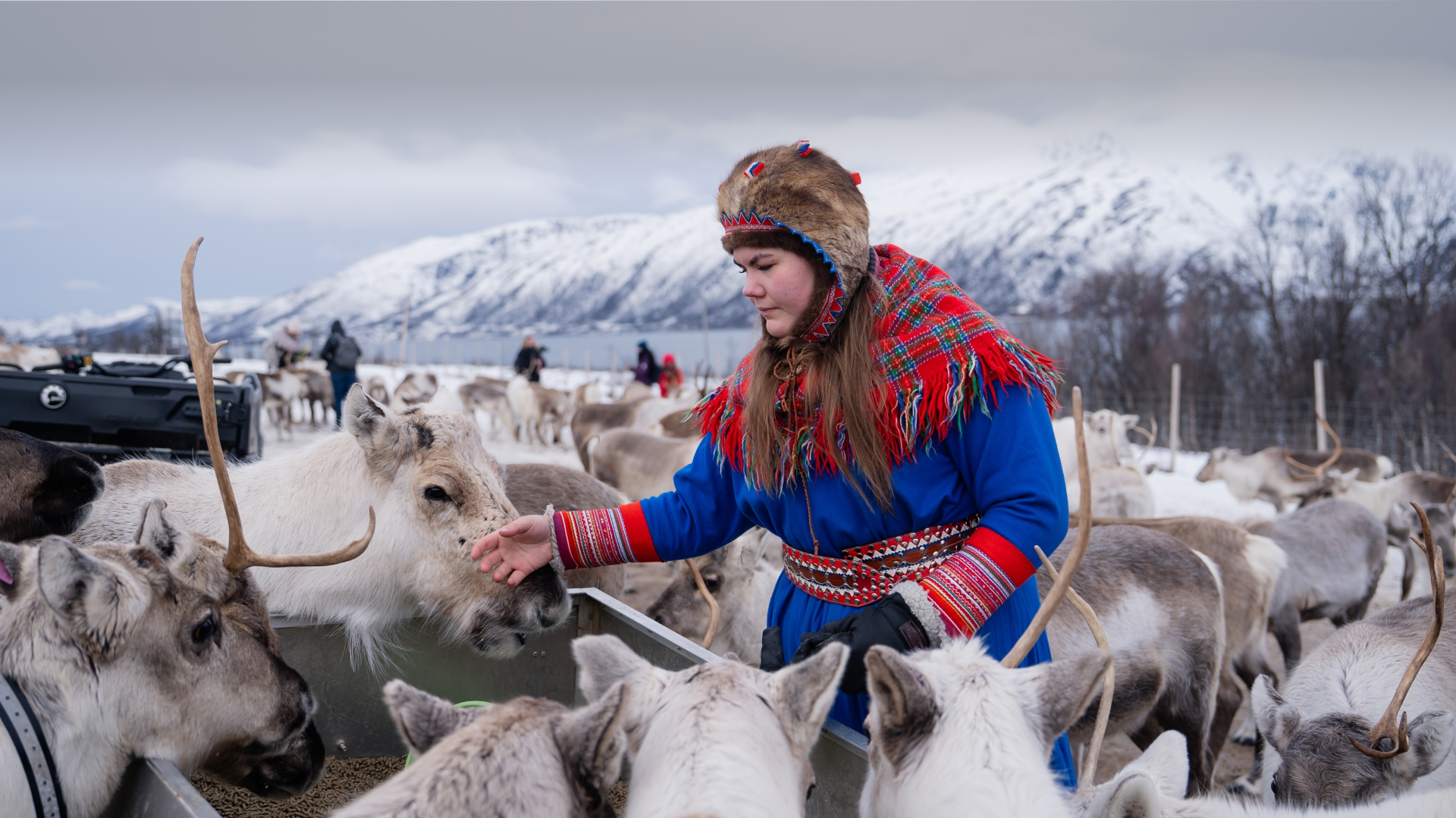
This lack of natural food undermines one of the main economic activities of the Sámi people, the only indigenous people in Europe, currently witnessing an increase in grazing production costs due to the price of feed. That is, climate change is harmful to the natural habitat of reindeer, which, in turn, are indispensable to mitigate the effects of these changes.

Global warming is not the only factor behind the degradation of the these animals’ habitat. Building railways or deforestation caused by logging have also affected the entire ecosystem, a difficult balance between economic development and cultural and environmental preservation.

In Finland, the Sámi Climate Council, which integrates science and traditional knowledge was established to develop strategies to adapt to climate change, protecting the environment, but also the indigenous way of life, whose physical and mental health is already suffering.

Save the reindeer kingdom

But how do reindeer help in the thermal balance of this region? This is what the researchers are trying to understand, and there is already research that confirms this theory on the ground. For example, a study published in the scientific journal BMC Ecology at that time showed a relationship between the presence of herbivores and the neutralisation of the effects of global warming on Arctic vegetation.

Reindeer seem to eat shrubs, which grow uncontrollably with increasing temperature and are responsible for greater heat absorption. What’s more, by simply walking on snow, these animals allow cold to penetrate deeper into the ground and keep permafrost frozen.

Saving the reindeer is thus a responsibility of everyone with global benefits. For the sake of reindeer, the Sámi people, our planet and, of course, Santa Claus. What would the generous, bearded old man – and us – be without his friendly assistants?

Did you know that…

  • Despite the extreme climate, the boreal forest is home to a wide variety of fauna: elk, reindeer, bison, bears, wolves, foxes, beavers, migratory birds.
  • The boreal forest stores about one third of the terrestrial carbon, being crucial for climate balance.
  • In August this year, the Finnish Meteorological Institute recorded a 22-day period with temperatures above 30°C in Finland, the longest heat wave recorded since 1961 – when measurements began – and which led to the death of several reindeer.

Temas: