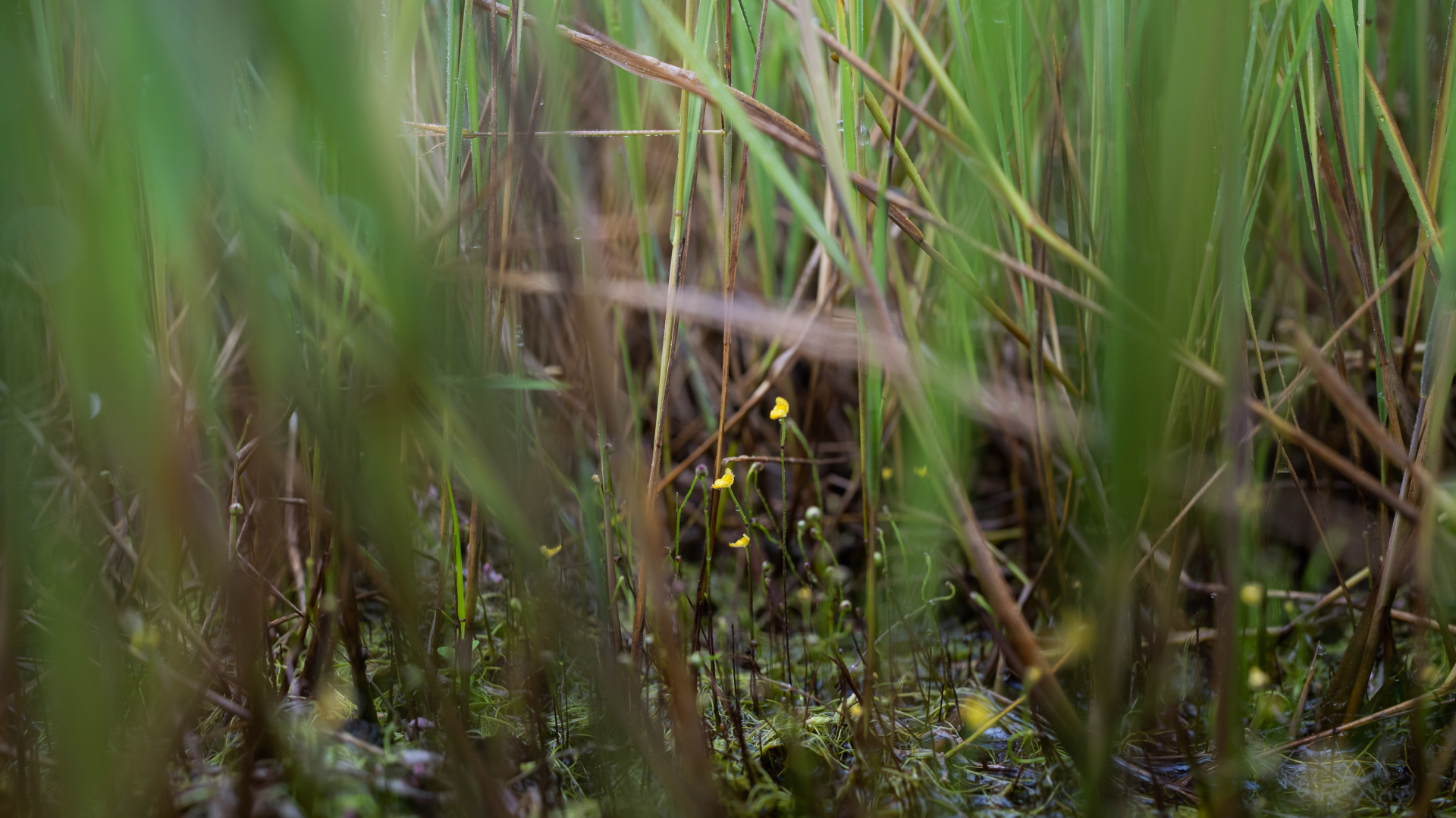


Commonly known as the humped bladderwort or floating bladderwort, Utricularia gibba is a small aquatic carnivorous plant belonging to the family Lentibulariaceae, within the order Lamiales.
Imprima ou partilhe nas suas redes sociais:
9 de julho de 2026
Tiny, vulnerable, deadly. The humped bladderwort occurs in aquatic communities inhabiting lakes, temporary ponds, marshes, and other wetlands associated with sandy soils, particularly in coastal areas. It may not look like a predator, but it captures its prey with astonishing speed. It can grow anchored to the substrate in shallow waters or float freely within the water column.
This is a subcosmopolitan species, present on every continent except Antarctica. Its native distribution includes North and Central America, the Caribbean, the Western Mediterranean, South Africa, and southern India.
Despite its wide distribution, it is considered an invasive species in several parts of the world, including Hawaii, Australia, Japan, New Zealand, Singapore, Serbia, Hungary, and the United Kingdom. In mainland Portugal, Utricularia gibba is a native species, although it is absent from the Azores and Madeira archipelagos.
A carnivorous plant that never hesitates to pull the trigger
The floating bladderwort tends to form dense mats of thin, branching stolons that can exceed 20 centimetres in length. Its morphology is highly reduced, with leaf-like structures developing along the stolons, where small ovoid bladder traps measuring around 1 to 2.5 millimetres in length are formed. These traps are the species’ most distinctive feature.
Equipped with sensory appendages that act as triggers, the traps capture small aquatic organisms through suction, which are then digested. This carnivorous strategy is an adaptation to nutrient-poor environments, particularly those deficient in nitrogen and phosphorus.
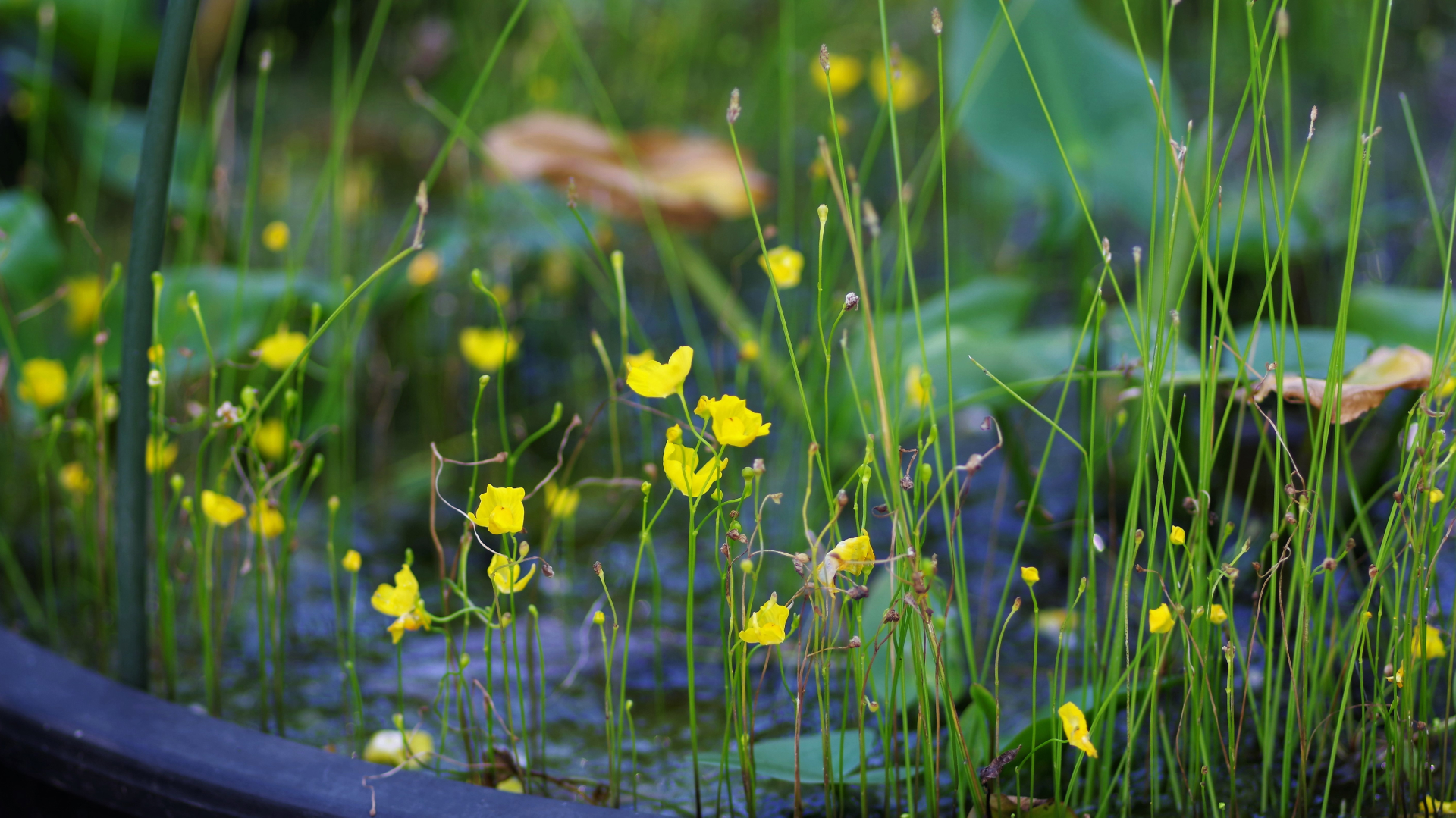
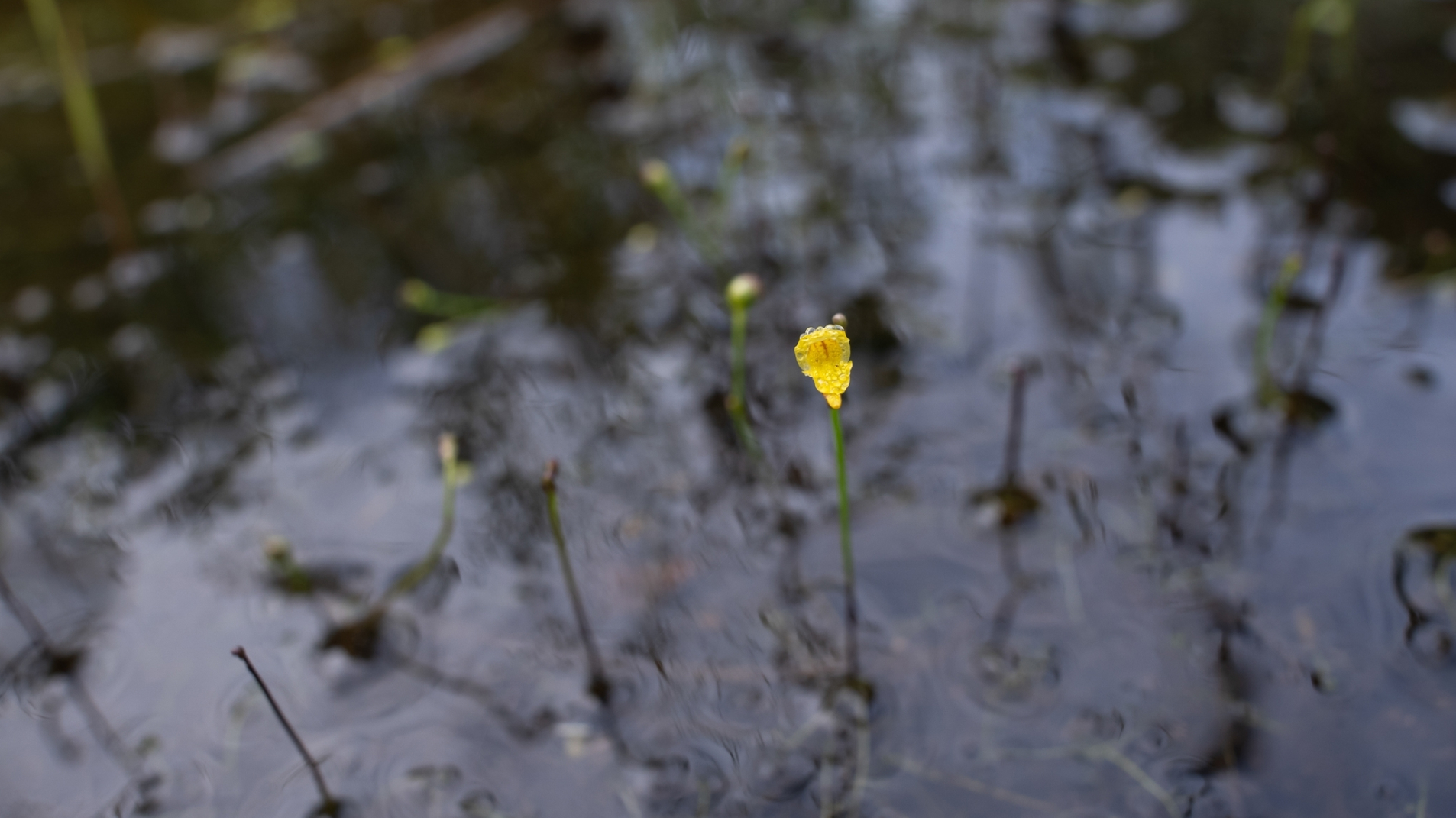
Its inflorescences are erect and may rise up to around 20 centimetres above the water surface. In some situations, however, they develop underwater, producing cleistogamous flowers (small, inconspicuous closed flowers in which self-pollination occurs, a form of reproduction whereby hermaphroditic flowering plants, possessing both male and female reproductive structures, fertilise themselves). Each inflorescence generally bears between two and six yellow flowers, sometimes marked with reddish-brown veins, with a corolla divided into two lips and a narrow, curved spur.
The flowers range from 0.8 to 1.5 centimetres in size and may appear throughout the year whenever environmental conditions are favourable.
Beyond its remarkable morphological and ecological characteristics, Utricularia gibba also stands out for its extraordinarily compact genome. Although it possesses several genes comparable to that of many other plants, its genome contains only around 3% non-coding DNA, making it a unique example of genetic organisation within the plant kingdom
A “Vulnerable” bladderwort
According to the Red List of the Vascular Flora of Mainland Portugal, the humped bladderwort is classified as “Vulnerable” (VU) under the criteria of the International Union for Conservation of Nature (IUCN). Although it is a globally widespread species, its area of occurrence in Portugal has declined significantly, mainly due to the disappearance of several populations north of the Tagus River.
At present, only seven locations are known, with a continuing decline in its distribution, population size, and habitat quality.
The main threats to its conservation are directly linked to changes in hydrological regimes resulting from the intensification of agricultural and forestry activities, as well as the increasing frequency and duration of extreme droughts associated with climate change. Given the vulnerability of the lowland hygrophilous and aquatic habitats in which it occurs, it is essential to implement conservation measures that include the restoration and management of these ecosystems, regular monitoring of known populations, and strengthened survey efforts across areas within its historical range.
Did you know?
- Despite having no muscles or nervous system, Utricularia gibba uses tiny bladder-shaped traps that function like microscopic vacuum cleaners. When triggered by the contact of prey with sensory hairs, the traps open and suck in their victim within just a few milliseconds, making the genus Utricularia one of the fastest predators in the plant kingdom.
- The humped bladderwort possesses one of the most compact genomes known among flowering plants. Remarkably, despite having a number of genes comparable to that of many other plant species, only around 3% of its DNA is non-coding, making it a fascinating model for studying the organisation and evolution of plant genomes.
How do we protect this species?
The protection of the garden dormouse (Eliomys quercinus) relies primarily on the preservation of its habitat and the adoption of sustainable forest management practices. As the species is declining across much of Europe, its conservation requires measures that promote coexistence and respect for ecological balance.
Key conservation actions include safeguarding its natural shelters by avoiding the destruction of stone walls, hedgerows, piles of branches, and old or hollow trees. These features are essential for nesting, as well as for resting during hibernation (winter) and aestivation (summer).
In areas managed by The Navigator Company, zones of conservation interest are identified and managed to maintain or enhance the habitats occupied by this species. This approach helps ensure the availability of resources for feeding, shelter, and breeding, while also functioning as ecological corridors that facilitate natural dispersal and genetic exchange between populations.
-
Humped bladderwort
Utricularia gibba
-
Plant
-
Genus
Utricularia
-
Family
Lentibulariaceae
-
Habitat
Occurs in lakes, temporary ponds, marshes, and other wetland habitats associated with sandy soils, particularly in coastal areas. It may grow anchored to the substrate in shallow waters or float freely within the water column.
-
Distribution
It is a subcosmopolitan species, occurring on every continent except Antarctica. Its native distribution includes North and Central America, the Caribbean, the Western Mediterranean, South Africa, and southern India. In Portugal, it is native to the mainland, although it is absent from the Azores and Madeira archipelagos..
-
Conservation Status
“Vulnerable” (VU), according to the Red List of the Vascular Flora of Mainland Portugal and the criteria of the International Union for Conservation of Nature (IUCN).
-
Height / Length
Its thin, branching stolons can exceed 20 centimetres in length, while the inflorescences may rise up to around 20 centimetres above the water surface.
-
Lifespan
Perennial
