Biogallery

Amphibian

Iberian midwife toad: the echo of autumn

Have you ever stopped for a moment, on a rainy autumn night, and heard a sound similar to a small fife? You’ve probably heard the Iberian midwife toad, a small amphibian whose chant heralds rain, life, and one of the most curious parenting behaviours in the animal kingdom.

The above may have fuelled your belief in fairies or magical goblins, but this chant came from an even more extraordinary being: the Iberian midwife toad  (Alytes cisternasii). This little amphibian is an excellent singer that echoes its melodies in the wind, announcing the autumn rains.

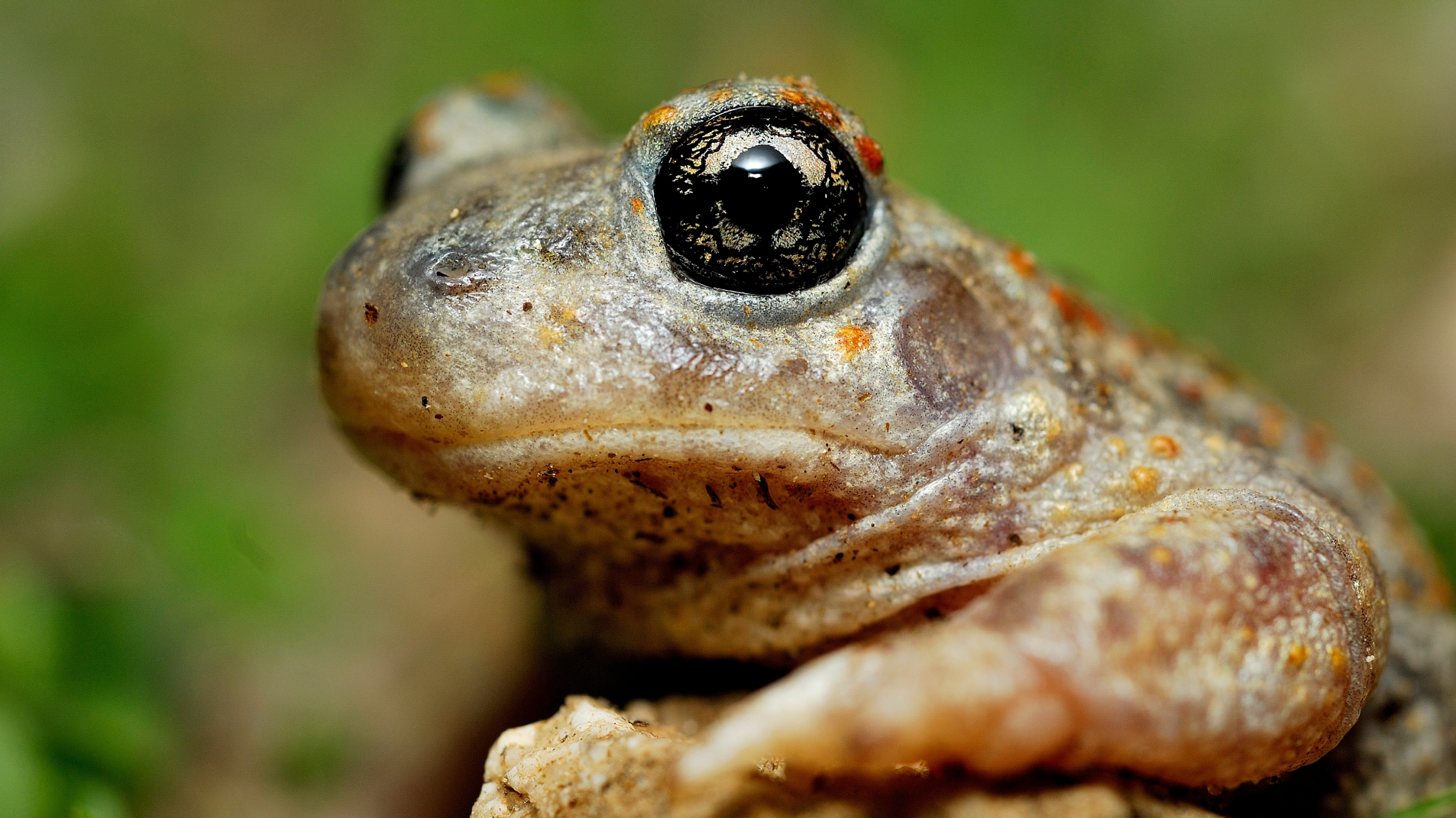
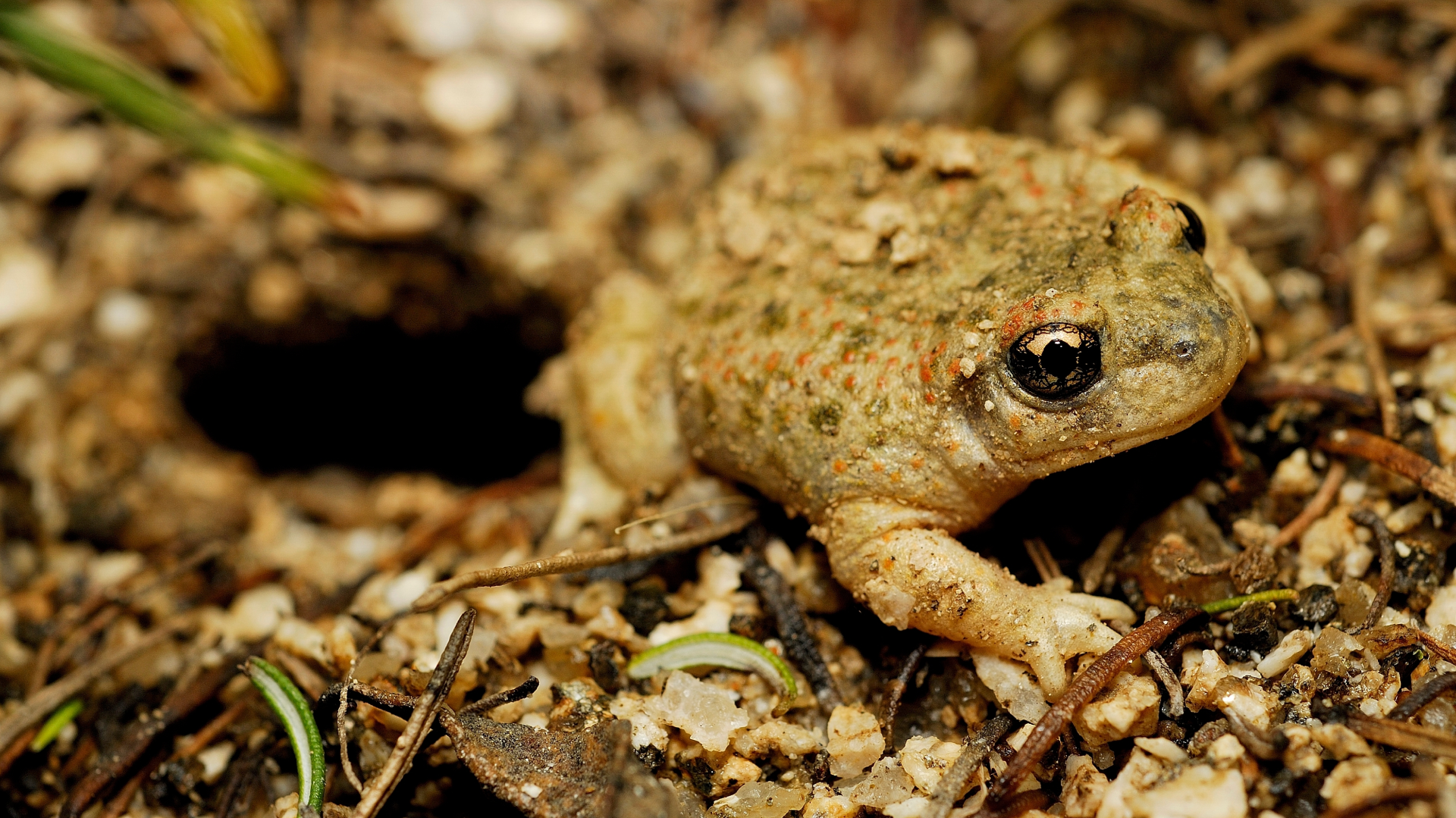
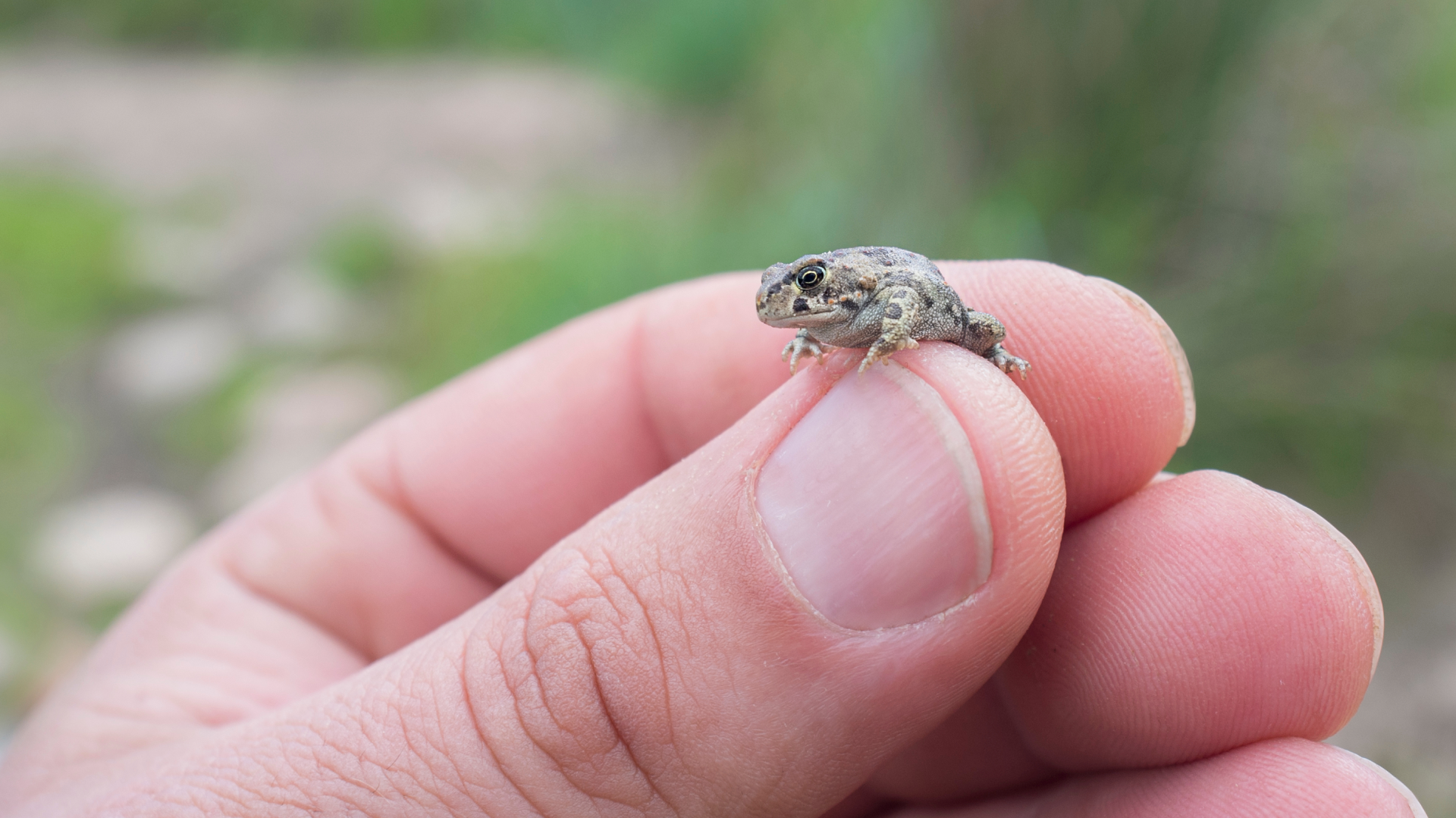
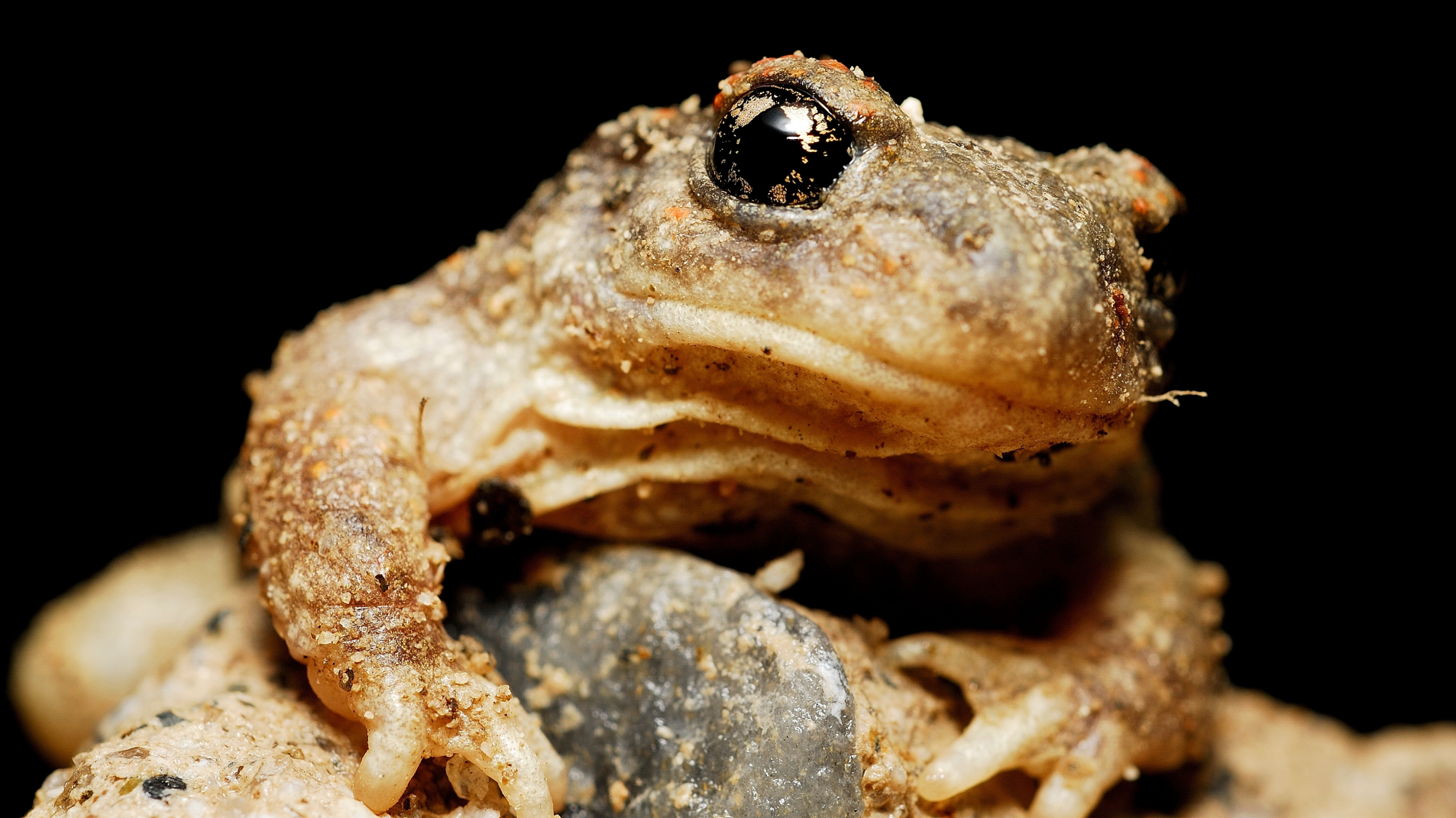
With a rounded body and robust appearance, the Iberian midwife toad rarely exceeds 5 centimetres in length. Its rough skin in shades of brown, grey or olive green, dotted with warts and orange spots, acts as natural armour against predators such as water snakes, birds and small mammals such as the otter, weasel or hedgehog, present in its habitat, allowing it to camouflage between moist leaves and stony soil.

Small, nocturnal, and unobtrusive, the Iberian midwife toad is not easily spotted during the day, as it prefers to hide in holes, under rocks or tree trunks. When night falls, it leaves its refuges in search of insects, spiders and other small invertebrates, playing an essential role in pest control and the health of the Mediterranean ecosystems where it lives in.
The echo of autumn

However, there are special nights. The midwife toad echoes its chant, especially in the autumn, between mid-October and November – a short, soft and rhythmic whistle that can be heard on wet, warm nights, when the first rains awaken the males for the reproductive season.

This sound can be mistaken with that of its close relative, the common midwife toad (Alytes obstetricans), but there is an important difference: while this Iberian species breeds in autumn, the common toad prefers to wait for the cool spring nights, breeding between late February and mid-July.

The name of this amphibian derives from the particular fact that it occurs only in the Iberian Peninsula. A typical species of the Mediterranean environment, the Iberian midwife toad prefers dry soils, open slopes and cork oak and holm oak forests, provided there is temporary water nearby.

In Portugal, it can be found in almost all regions south of the Tagus and also in the Central and Northern Interior, with an important nucleus in the warmer lands of Trás-os-Montes. Its close relative, the common midwife toad, occurs mainly north of the Tagus River and in the cooler mountain regions, such as Serra da Estrela and Gerês, preferring mountain and humid areas.

The father that carries the eggs on his back

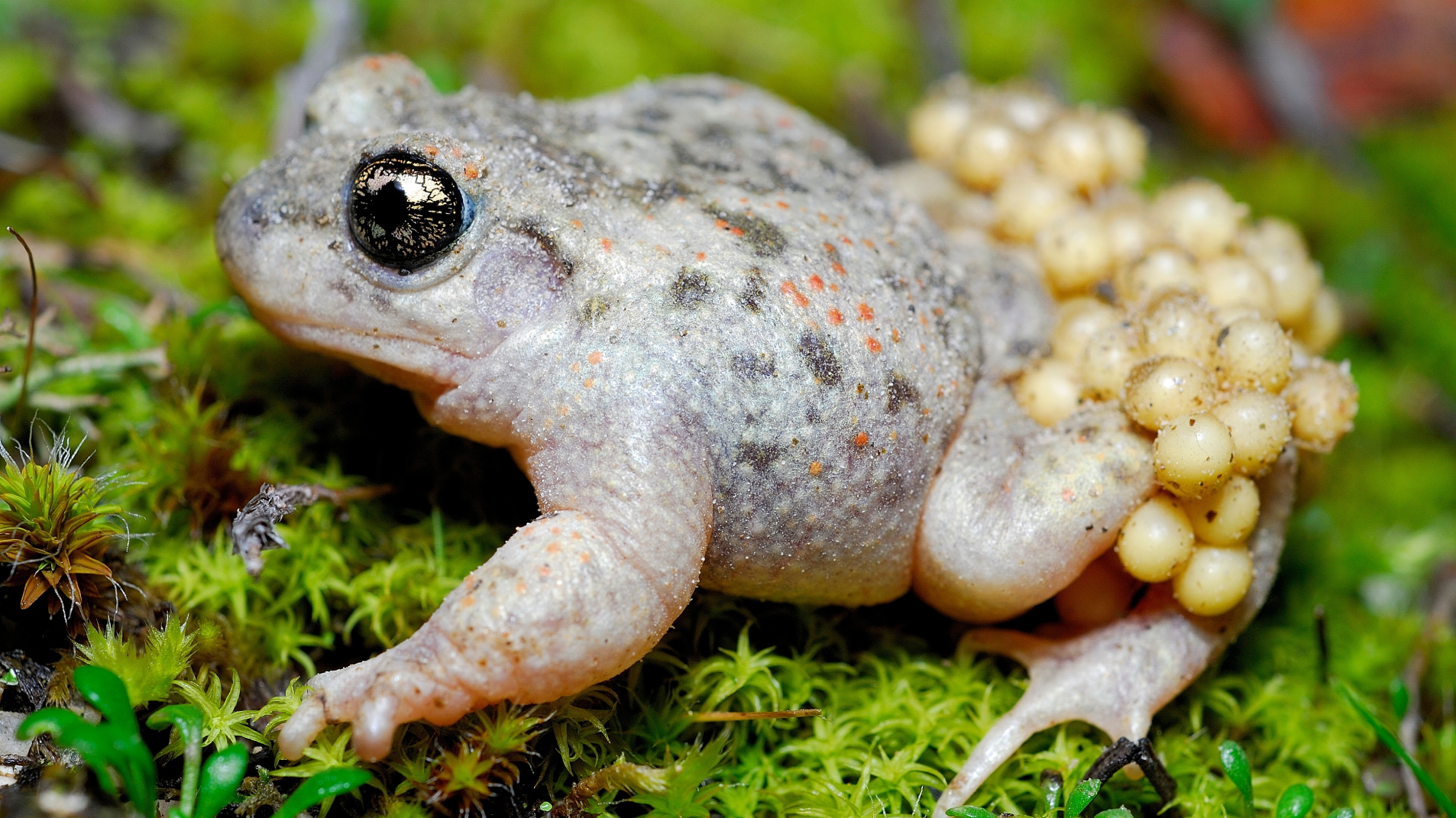
Among European amphibians, midwife toads are known for their unique reproductive behaviour. After mating, the female lays a string of eggs that the male carefully wraps around his hind legs, carrying them for about three to four weeks, keeping them moist and protected from desiccation and predators until the moment of hatching.

When the tadpoles are ready to hatch, the male moves to a temporary puddle or rain puddle, where it releases them to complete development. This strategy – transporting the eggs to the water at the exact moment – is a remarkable adaptation to the Mediterranean climate characteristic of the Iberian midwife toad, where water bodies can be scarce and short-lived.

Habitat and conservation

Within the Mediterranean environment, the species inhabits cork and holm oak forests, oak forest clearings, agricultural fields and stony slopes, usually between 100 and 600m in altitude, where it seeks temporary puddles and watercourses with little dense vegetation, which serve as shelter and breeding ground.

Although it is still a common species in many regions of southern Portugal and Spain, it faces increasing threats, such as habitat loss, drainage of these wetlands, road traffic and emerging diseases such as chytridiomycosis, caused by the fungus Batrachochytrium dendrobatidis.

According to the IUCN Red List, Alytes cisternasii is classified as “Least Concern (LC)”, but local populations may suffer declines due to habitat fragmentation and surface water contamination.

Did you know that…

  • The name “midwife toad” comes from the paternal behaviour of the males, which carry the eggs until hatching, as if “helping in childbirth”.
  • Its exclusively autumnal reproduction is one of the most remarkable adaptations among European amphibians.
  • Each male can carry up to 60 eggs at once, in two cords wrapped around the hind legs, for several weeks.
  • The melodious chant, similar to a small fife, can be heard more than 100 meters away and is softer and lower than that of its relative, the common midwife frog.
  • The presence of midwife frogs is considered an indicator of healthy ecosystems, as they are sensitive to pollution and water degradation.
  • Iberian-midwife-toad

    Alytes cisternasii

  • Realm

    Animalia

  • Order

    Anuras

  • Phylum

    Chordata

  • Class

    Amphibia

  • Family

    Alytidae

  • Genus

    Alytes

  • Habitat

    oak meadows and open forests with nearby watercourses, preferably in siliceous soils and sandy soils, with little dense vegetation.

  • Distribution

    Endemic to the Iberian Peninsula; in Portugal, common south of the Tagus River and inland to Trás-os-Montes

  • Conservation status

    Least Concern (IUCN)

  • Length

    Up to 5 cm

How to tend to this species?

Conservation of the Iberian midwife toad involves preserving and recovering its habitat, especially the Mediterranean ecosystems where it lives in. There are defined areas of interest for conservation, which are managed to maintain or improve habitats that offer better conditions for feeding, shelter and reproduction, and can act as ecological corridors to facilitate the natural spread of species and the genetic exchange between populations.
The conservation  and recovery of small bodies of water and watercourses, maintaining as much of their natural dynamics as possible, the maintenance of traditional agricultural tanks, the reduction of the use of phytopharmaceuticals and conditioning their use with water bodies are essential measures for the reproductive success of the species, since tadpoles need little-polluted water.

More than contributing to the success of a fascinating species of our biodiversity, conserving the Iberian midwife toad is protecting a living fragment of the Mediterranean natural heritage!

Temas: