Biogallery

Birds

Silence, please. It’s time for the song thrush to sing

If you don’t recognise this small bird, with a brown back and yellowish chest and arrow-shaped spots at first glance, maybe its singing will help you. Come and discover the song thrush (Turdus philomelos).

It is no coincidence that the song thrush (Turdus philomelos) is also known as thrush-musician. If there were a ‘The Voice’ for birds, this species would surely make it to the finals. While this species’ females mostly emit short warning sounds, males’ singing is melodious and flute-like, surprisingly loud for their size.

This thrush sings and scares away its predators. Its musical gifts are also used with mastery in courtship ‘serenades’. At the nuptial parade, the male sings to the female as it approaches with its tail open and flattened on the floor, with the head tilted back and the beak open. In fact, its vast repertoire of short and repeated phrases is especially audible in the breeding months, between April and June.
Country of wintering immigrants

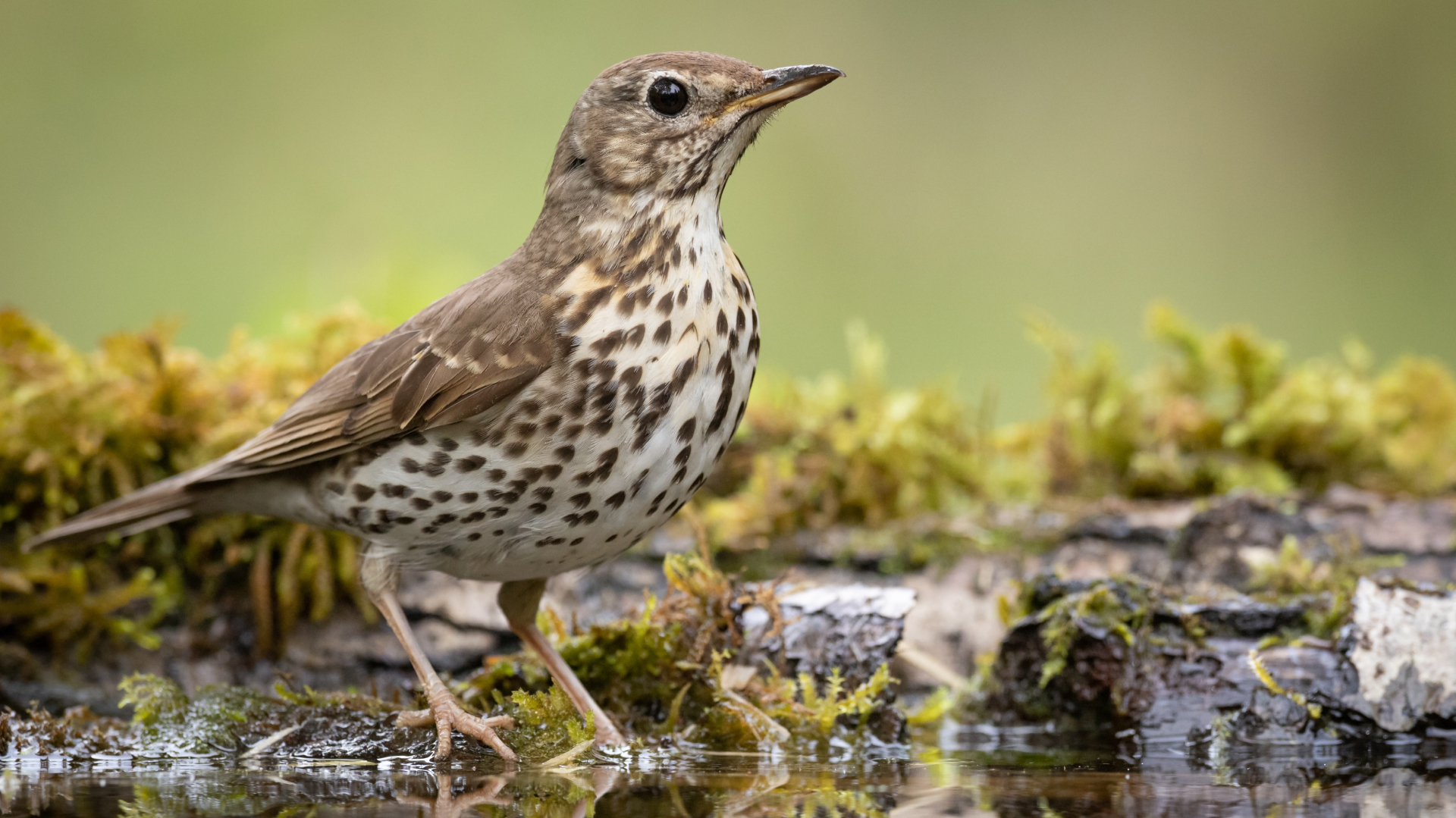
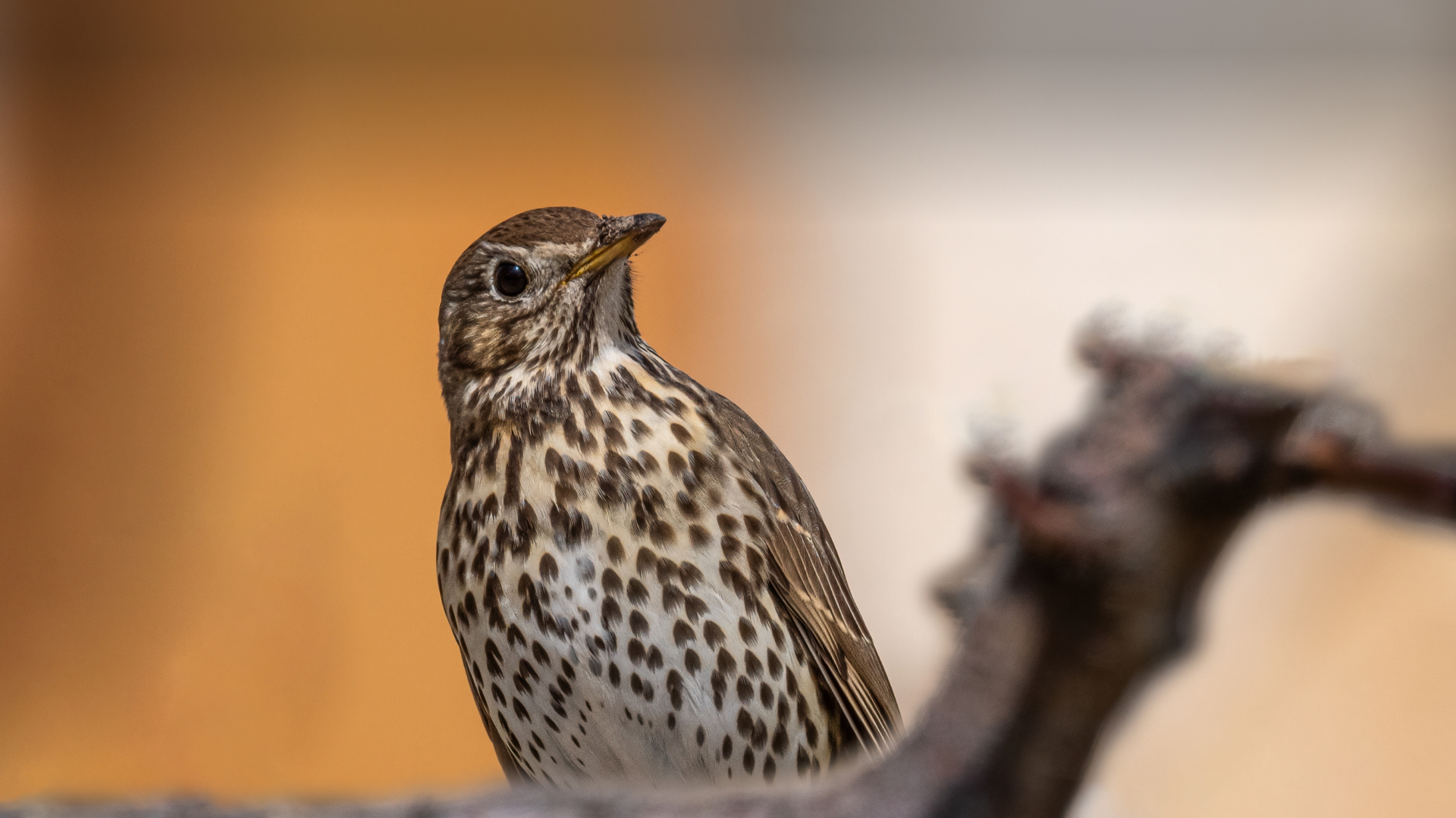
Small, with a brown head, back and tail, a yellowish chest with dark arrow-shaped spots, a black and yellow beak and pinkish legs, the thrush can be seen in Portugal all year round. But not all of them reside here full-time.

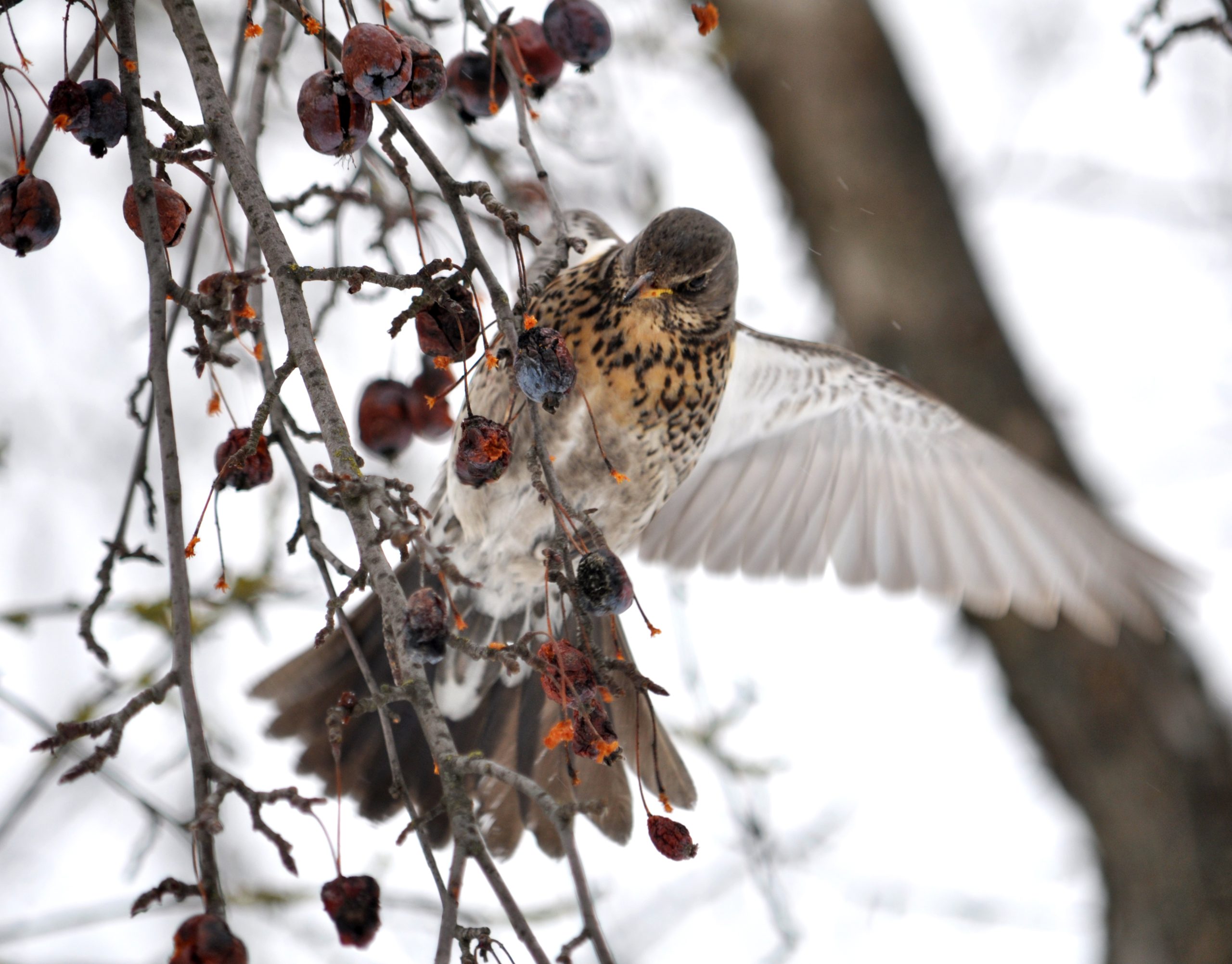
The smallest resident (nesting) population is joined by migratory (wintering) birds, which arrive in the autumn from Northern and Central Europe, returning to their countries of origin and reproducing in the spring. That is why, in the colder months, the song thrush, in larger numbers, spreads throughout the continental territory – the Portuguese islands have their own endemic species – and, at the time of nesting, lives mostly in the northern half of Portugal. There, deciduous and mixed forests, bushland, riverside forests, agricultural areas, parks and wooded gardens meet the ideal conditions for shelter and feeding of these omnivorous birds, which survive on invertebrates (worms, snails, among others), berries and fruits, including olives.

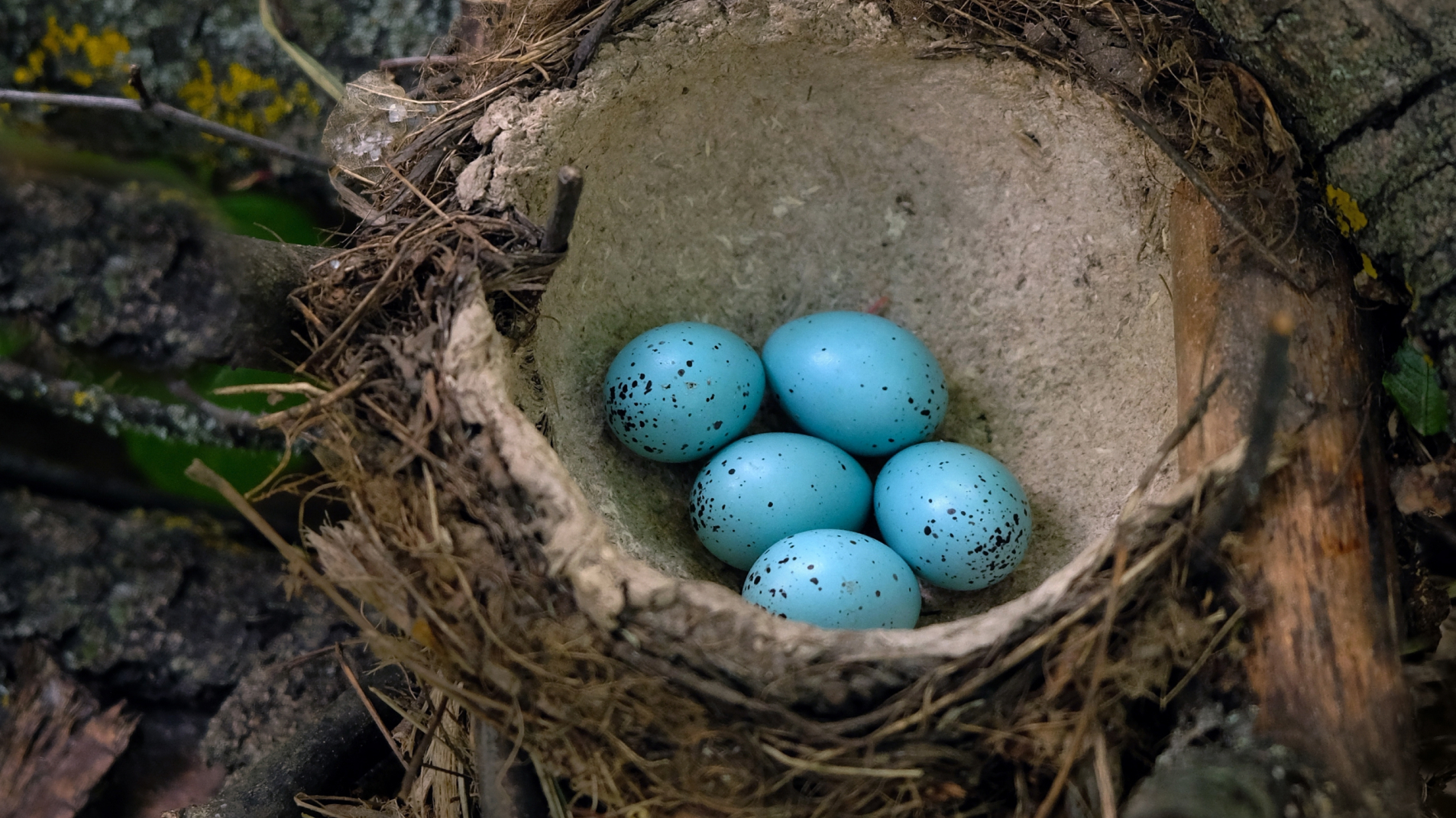
Females build their nests in trees or shrubs, while males sing nearby. Made with grass, branches, moss and clay, they are cup-shaped and can accommodate several consecutive egg layings, between three and four per year, each with four to six blue eggs! The colours of these birds’ eggs are thought to be related to geographical, camouflage and thermoregulation factors, among others.

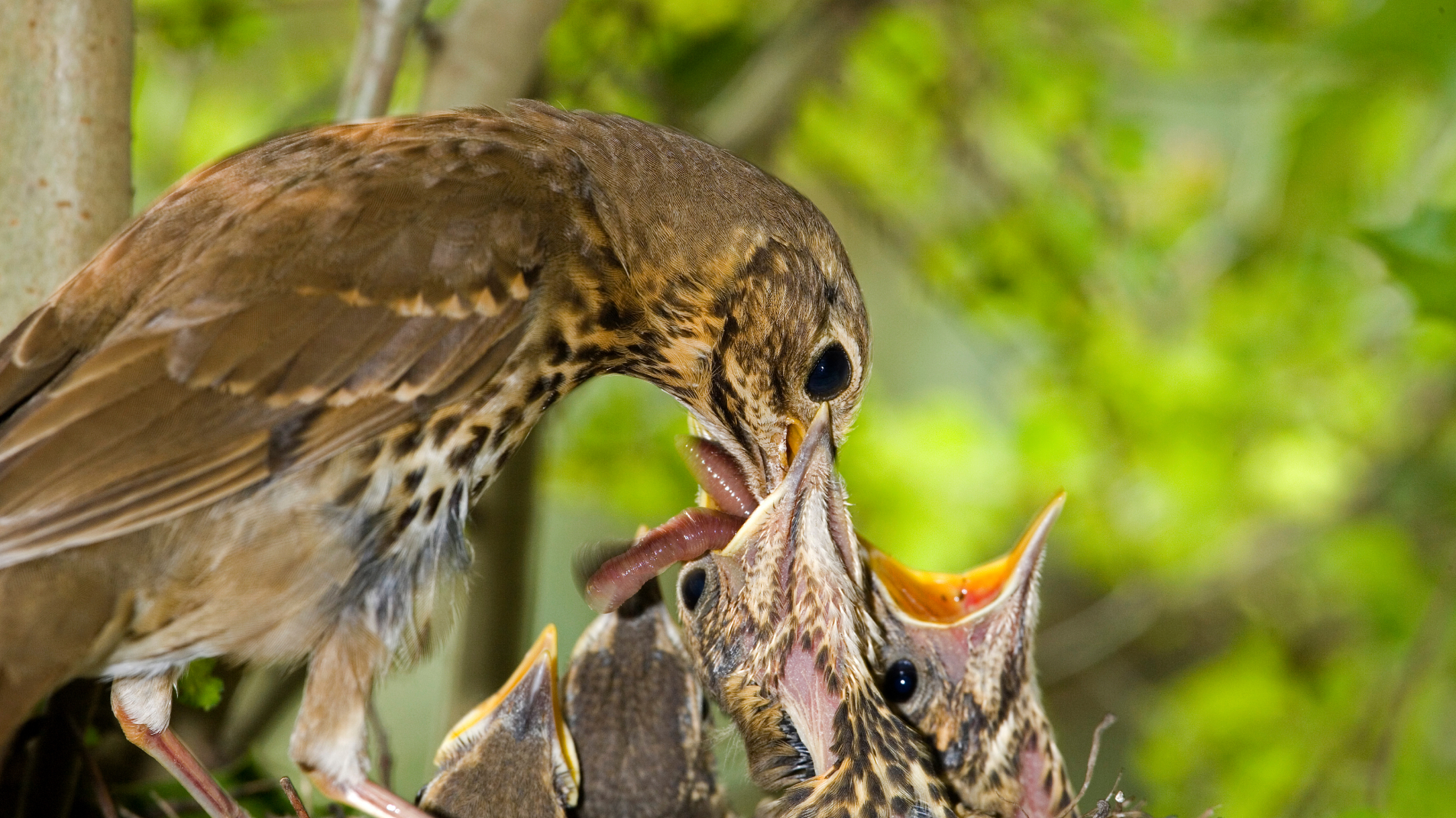
And if incubation (about 13 days) is up exclusively to females, feeding the chicks, with larvae of insects, worms, slugs and snails (whose bark breaks with a stone), is shared by the couple, which remain monogamous throughout the reproductive season, when these birds become solitary, as opposed to the more gregarious behaviour they may have during the winter.

Cancelled flights

When the chicks leave the nests, about 14 days after hatching, they do not know how to fly. They jump or crawl until they reach the ground and look for shelter in the vegetation. Despite being protected by their parents for a few more weeks, their extreme vulnerability is one reason why the mortality rate of these birds is above 40% in the first year. It is worth mentioning that the average life expectancy of the common thrush is only three years.

Among the threats to the song thrush are the degradation of its natural habitat (reduction of dense vegetation zones and intensive agriculture), climatic factors (harsher winters) and predators such as cats and birds of prey (Eurasian sparrowhawk and little owl).

In Portugal, although it is one of the most hunted game birds – the expression ‘to fall like a thrush’ is no coincidence – the status of the song thrush is considered ‘of little concern’, according to the ‘Red List of Birds in Portugal’ (2022), a guide that assesses the risk of bird extinction in mainland Portugal. The ‘III Atlas of Breeding Birds in Portugal’ (2015-2021) points to the existence of 5 to 10 thousand couples, a population increase trend.

Did you know that…

  • Turdus is the Latin term for thrush and philomelos originates from the Greek words philos and melos, which mean respectively ‘lover’ and ‘melody’, referring to the melodic richness of their singing.They are bracts, modified structures that help attract pollinators from a distance.
  • The song thrush was introduced in New Zealand in the 1860s.
  • A single song thrush can eat up to 15,000 snails per year.
  • Compared to its weight, the thrush has the loudest vocalisations among birds.
  • Song thrush

    Turdus philomelos

  • Class

    Birds

  • Order

    Passerine

  • family

    Turdidae

  • Habitat

    Deciduous and mixed forests, bushland, riverside forests, agricultural areas, parks and gardens, provided they are wooded. Can be very abundant in olive groves.

  • Distribution

    It can be spotted in North Africa, the Middle East, Siberia, Australia and New Zealand and nests virtually all over Northern Europe. In Portugal, it nests in the north of mainland Portugal, and is a common winter bird in the rest of the continental territory.

  • Conservation Status

    Least concern

  • Height / Length

    It can reach up to 23 cm in length and 36 cm in wingspan

  • Longevity

    About three years ago, although there are records of individuals over the age of 13.

How to tend to this species?

Although the song thrush is not threatened globally, there are signs of vulnerability in Portugal, particularly for resident populations. Excessive and unregulated hunting of this species has contributed to a decline in its populations, which is why the species deserves special attention at the national level.  

The Navigator Company properties include defined areas of interest for conservation, which are managed to maintain or improve habitats that offer better conditions for feeding, refuge and reproduction, and can act as ecological corridors to facilitate the natural spread of species and the genetic exchange between populations.

Temas: