Biogallery

Plants

Herb Robert: the healing power of nature

Crane beak, Robertine crane beak, or simply bird: these are some of this plant's names, commonly known as herb Robert (Geranium robertianum).

It’s a herbaceous plant with a short average life expectancy that completes its vegetative cycle in one or, sometimes, two years. Herb Robert (Geranium robertianum) has a slight hairiness along its body, giving it a delicately rough texture.

With red, slender stems, this plant can grow horizontally or erect, reaching 10 to 50 centimetres in height on average. When wrinkled, the stems and leaves release a strong and characteristic odour that can repel mosquitoes.

Belonging to the Geraniaceae family, herb Robert has triangular, cut-out leaves, like an open hand (palmatisectas) or a feather (pinatipartidas).

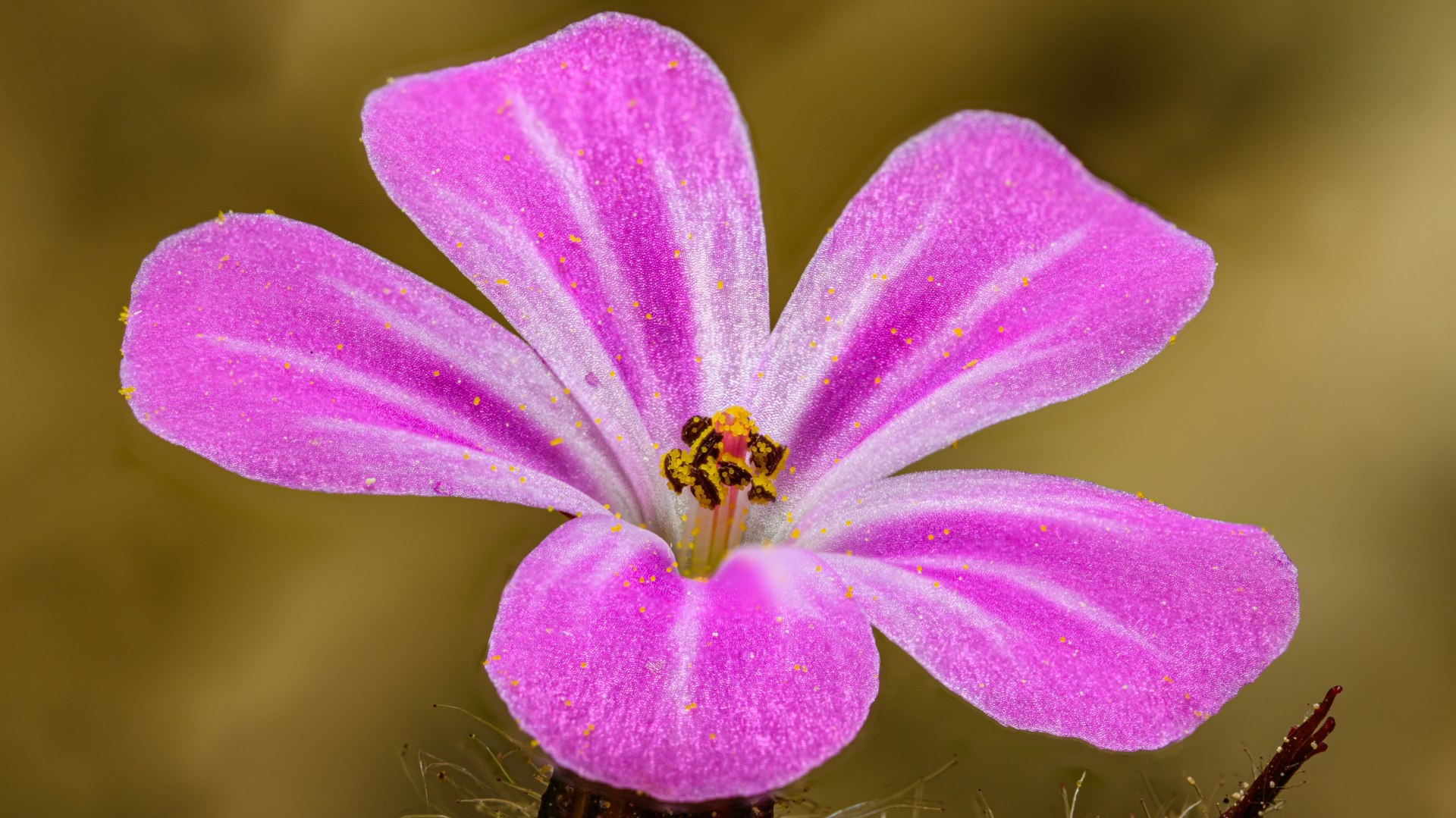
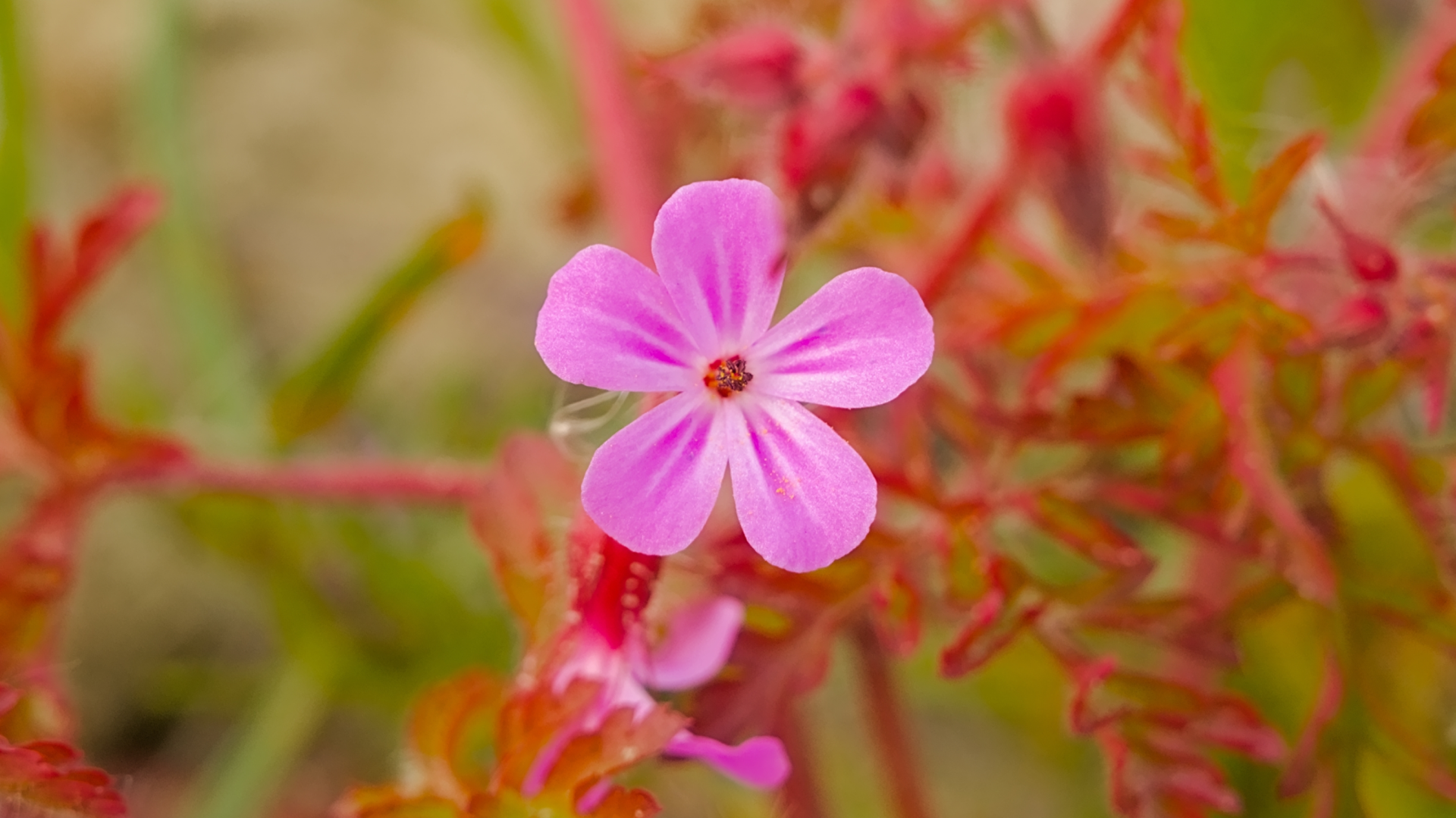
Flowering takes place between April and July, and generates small groups of flowers arranged in summits, structures where the central flower opens first. Each flower has a corolla with five petals, wider at the end than at the base (obovate) and a pinkish and bright colour. The androecium, the male part of the flower, consists of ten stamens, the filaments that produce pollen, slightly joined together at the base and arranged in two series. The chalice, which covers and protects the flower before it opens up, is formed by five spear-shaped sepals (lanceolate), smooth and separated from each other.

The fruits appear once a year (monocarpic) and may display a prominent longitudinal protruding cord. The seeds are dispersed through an active “release” mechanism, sticking to animals, clothing or footwear, thus ensuring efficient and comprehensive dispersal.
Along the paths of Portugal, a natural aspirin

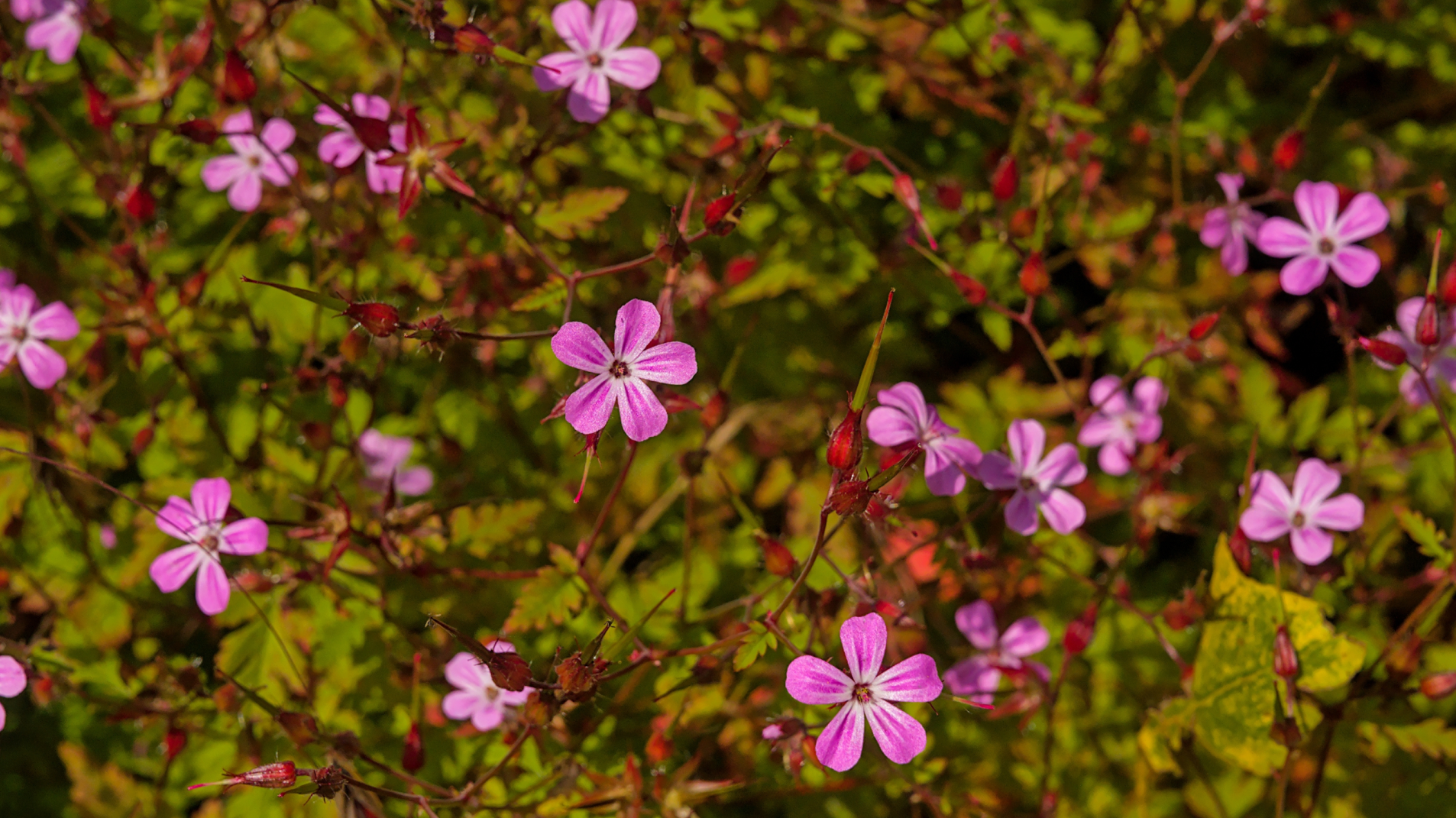
Native to mainland Portugal and the Madeira archipelago, herb Robert occurs all over Portugal, and at Quinta de São Francisco, one of the properties managed by The Navigator Company. Common in vacant land, hedges, walls and shady places, it is highly adaptable and can grow both under partial shade and in full sun, in fertile or stony soils.

Outside its native areas, it can “naturalise” easily, although in certain contexts, it behaves as an invasive or weed species.

This herbaceous plant has several medicinal properties. It is rich in tannins and has tonic and astringent characteristics. Its use is recommended in cases of diarrhoea, gastritis and enteritis. Its slight diuretic effect also helps control hypertension.

In external use, it is applied as a poultice to treat gingivitis, tonsillitis and sore throat. It is also used as a hypoglycaemic agent to help control diabetes.

Did you know that…

  • The genus name, Geranium, derives from the Greek geranos, which means “crane”, due to the fruit’s resemblance to this bird’s beak. The epithet robertianum may come from rupertianum, as in Saint Robert, or to ruber, red, due to the colour of the plant;
  • Herb Robert has been used in magic rituals since the Middle Ages. The North American Indians, for example, used it to stop bleeding, and it was known as a blood purifier.
  • In its natural state, its leaves can be incorporated into culinary dishes, from simple omelettes to fish recipes.
  • Plant

  • Genus

    Geranium

  • Habitat

    In Portugal, it occurs spontaneously in disturbed soils, along pathways, walls, hedges, the edge of forests and pine forests, dunes and rocks.

  • Distribution

    It can be seen throughout the European continent, Asia and North Africa. In Portugal, it can be found all over the continental territory and in the Madeira archipelago.

  • Conservation Status

    This species is not assessed

  • Distribution

    The species is present in Europe, Asia and Africa, reproducing in the Northern Hemisphere and migrating to Africa during the winter. In Portugal, it is distributed throughout the continental territory, and occurs more in the northern regions.

  • Conservation Status

    Least concern

  • Height/Length

    Between 10 and 50 centimetres.

  • Longevity

    Yearly, sometimes biennial.

How to tend to this species?

There are defined areas of interest for this plant’s conservation, which are managed to maintain or improve habitats that provide better conditions for feeding, shelter and reproduction, and can act as ecological corridors to facilitate the natural spread of species and the genetic exchange between populations.

Temas: