Biogallery

Biogallery

Fire Salamander: venomous, yet shy

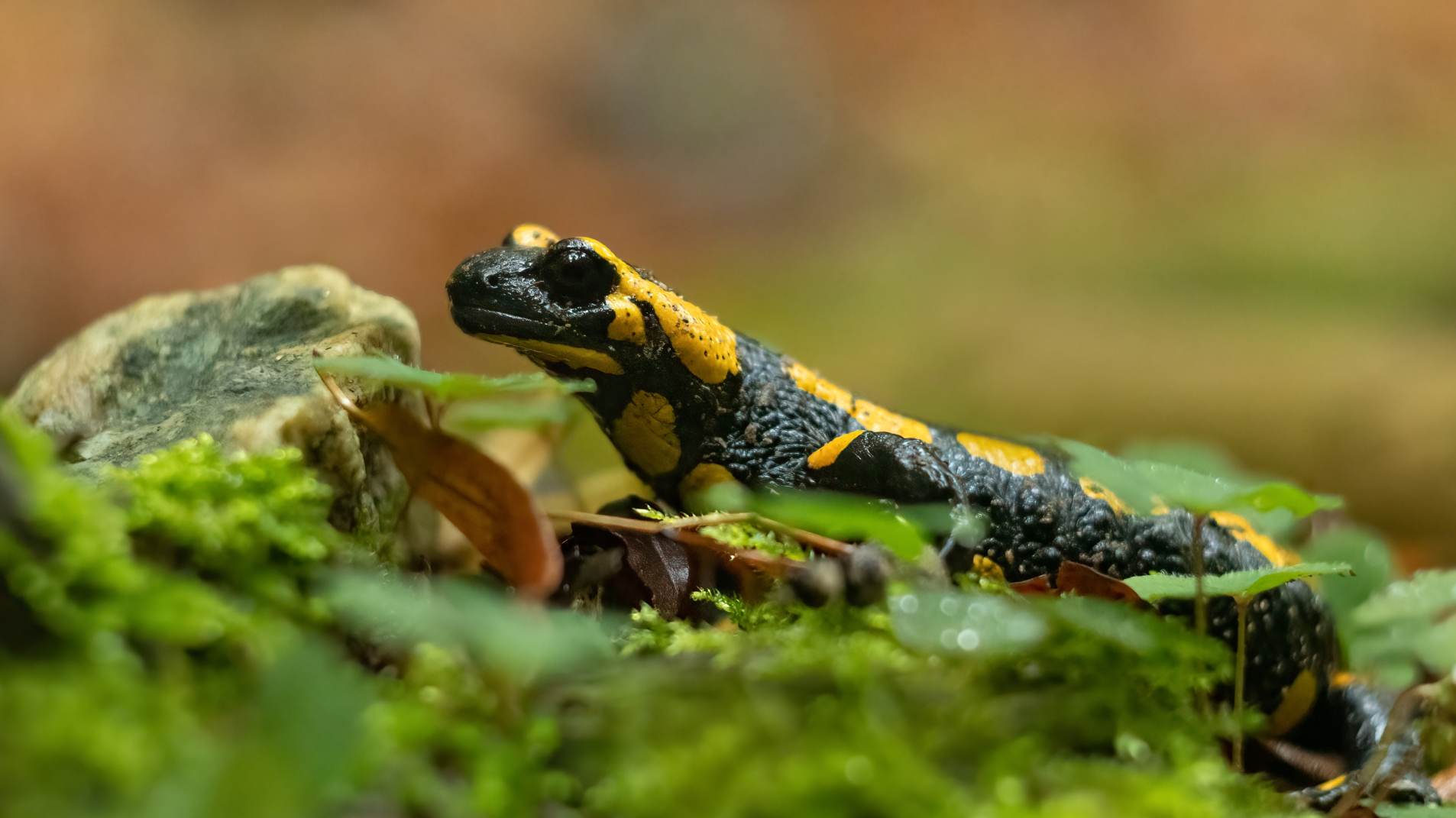
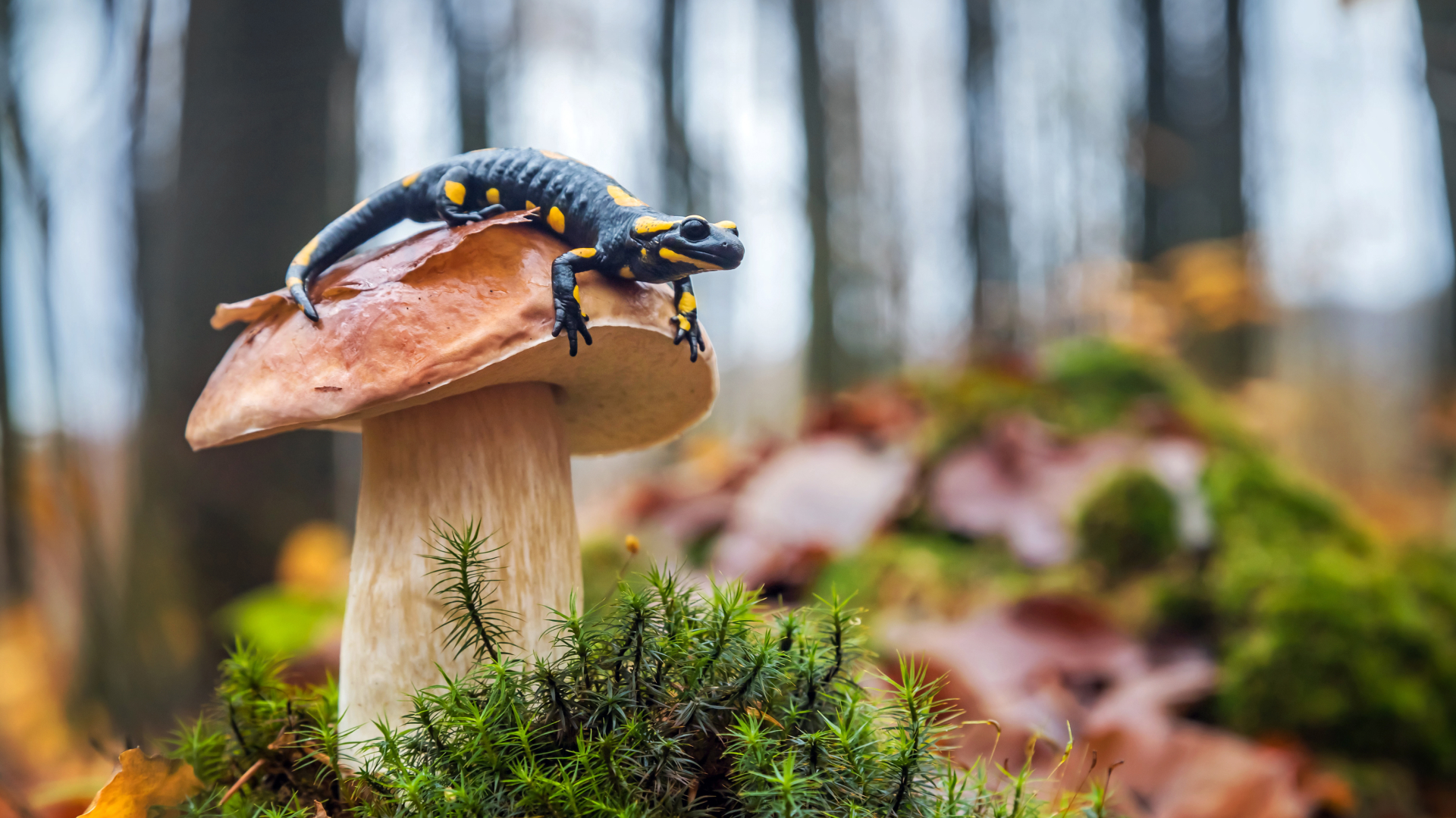
The fire salamander (Salamandra salamandra) is as photogenic as it is shy, leaving its shelter only after sunset and during the night. Its yellow spots, unique to each individual, help identify it in its favourite habitats: mountain areas or humid environments such as woodlands with ponds and small streams.

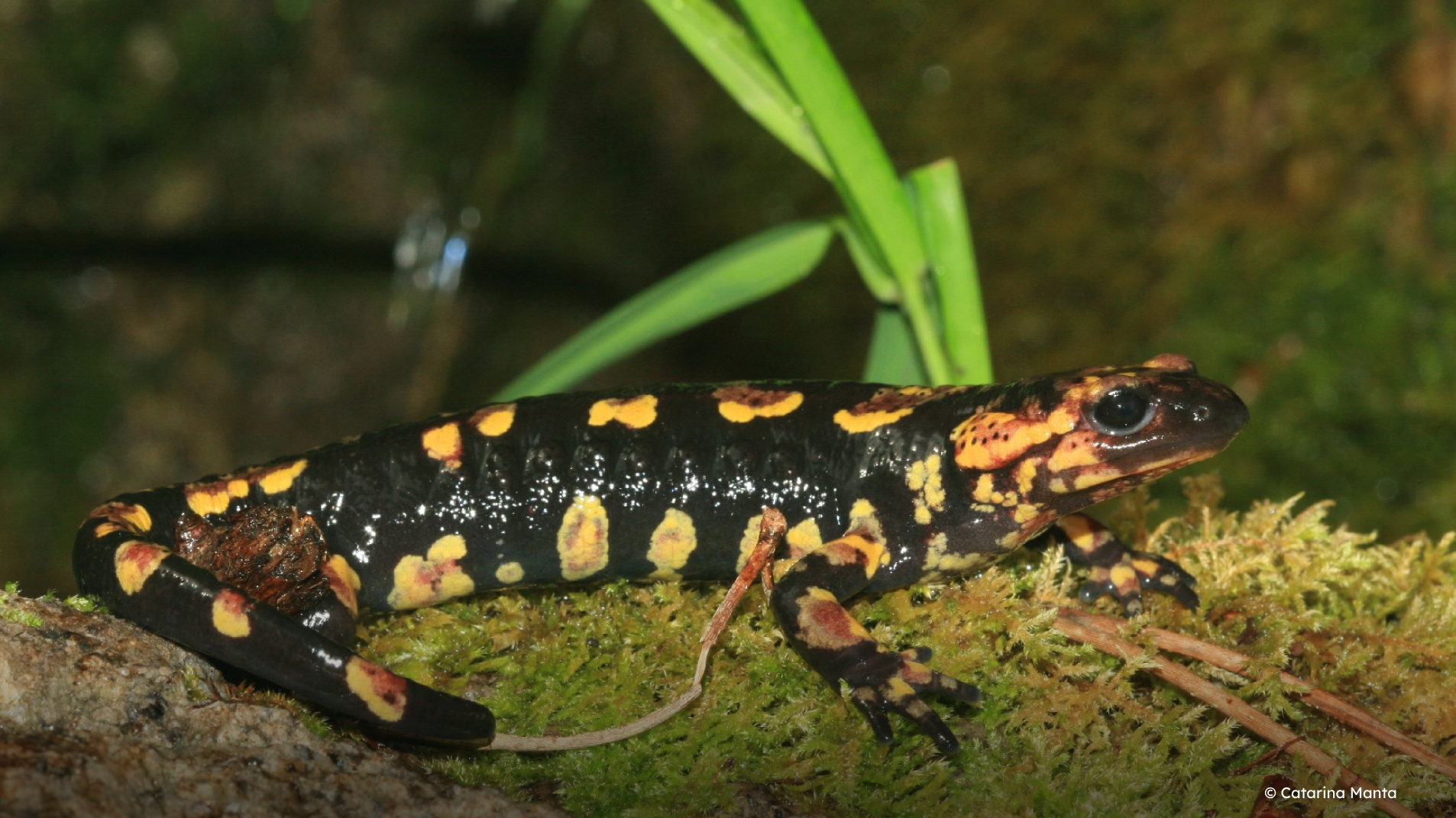
With smooth, glossy black skin marked by yellow blotches — sometimes mixed with orange or reddish spots — the pattern varies in shape and size and is as unique as a fingerprint. The fire salamander is truly one of nature’s most striking designs.

Beautiful as these spots are, they are also toxic, especially to predators that attempt to bite or ingest the animal. The toxins can cause violent vomiting. If handled, it is essential to wash your hands thoroughly to avoid accidental contact with the mouth or eyes.

Slender in shape, an adult fire salamander usually measures between 15 and 20 centimetres. Its physical features include a broad, flattened head with prominent black eyes and parotoid glands positioned just behind them. Half of its length is composed of the head and trunk; the other half is a cylindrical tail. Its limbs are short and robust, with four toes on the front feet and five on the hind feet.

As a terrestrial amphibian, it prefers cool, shady, humid mountain environments with regular rainfall throughout the year, ideally with temperatures between 4 °C and 14 °C. Wet habitats, temperate forests, pinewoods, eucalyptus stands, agricultural fields and woodlands with streams and ponds are ideal for the species, which often shelters under logs and stones. In urban areas, it may also take refuge in gardens and orchards. Here it finds its main food sources, composed mainly of terrestrial invertebrates. Its predators include grass snakes, vipers and several bird species.
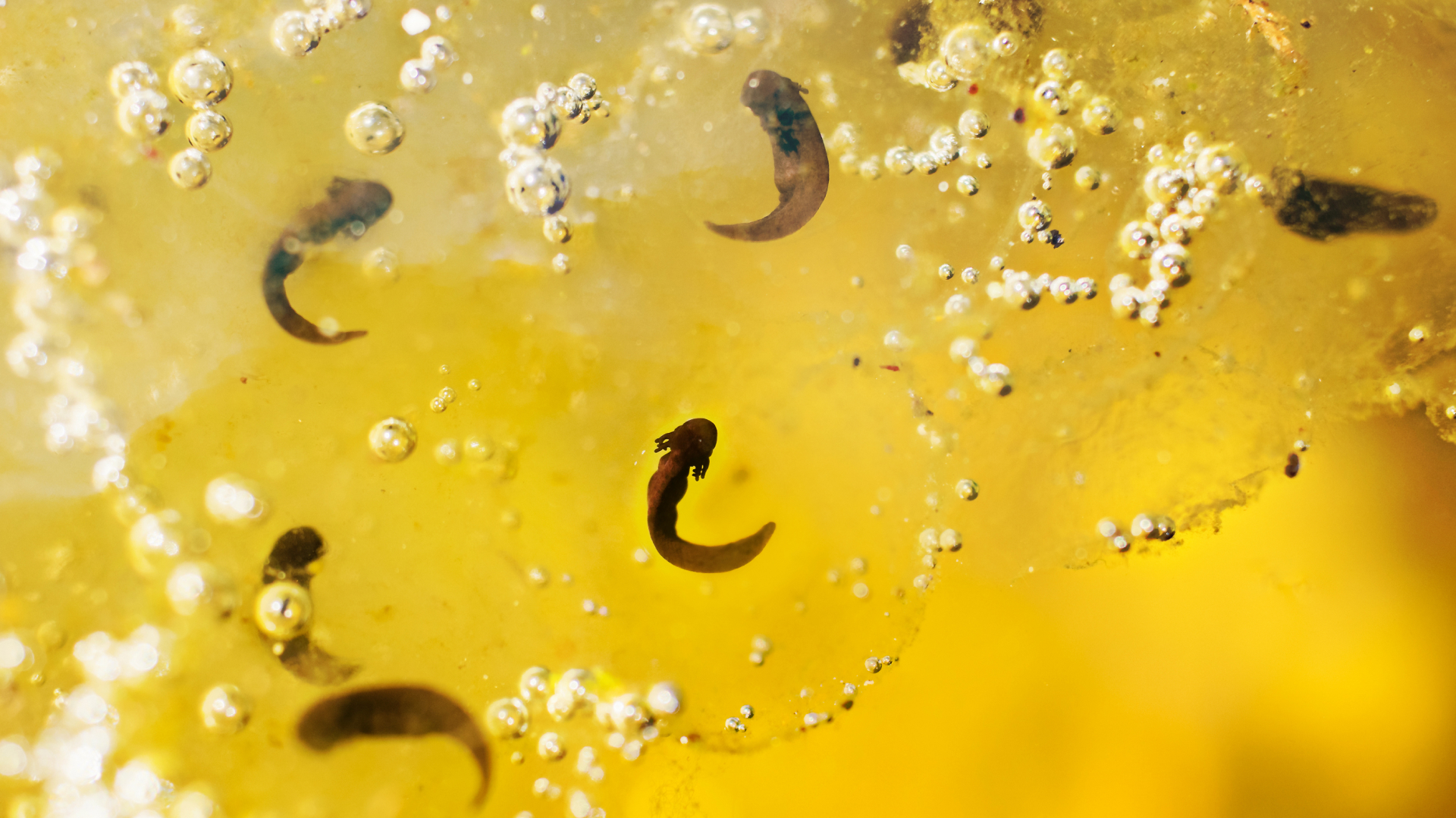
During mating on land, males deposit spermatophores—capsules containing sperm—which are collected by the female through the cloaca, where internal fertilisation occurs. Reproduction takes place in aquatic environments such as ponds, streams and springs, and begins with the first rains, between September and May, when females release their larvae.

An ovoviviparous species, the female gives birth to fully developed larvae, usually between 10 and 90, still with short tails and grey or brown colouration. Only after metamorphosis—two to five months after birth—do they develop their final pattern. Larvae feed mainly on aquatic insects, crustaceans, worms and the larvae of other amphibians. Sexual maturity is reached at around three to four years of age.

The species occurs across Central and Southern Europe, in the Eurosiberian region and Mediterranean mountain ranges, at altitudes between 200 and 2,500 metres. In Portugal, it is found throughout much of the country — from Montesinho Natural Park to the Southwest Alentejo and Vicentine Coast Natural Park — but is most common in the northern regions.

Did you know that…

  • This species is known by several common names, including fire salamander, common salamander, and spotted salamander.
  • Because each fire salamander has a unique spot pattern, individuals can be easily distinguished from one another.
  • The Discovery of a fossil in France revealed remarkable information: the fire salamander existed 35 to 40 million years ago, already resembling the species as we know it today. The organs were preserved through permineralisation (a process in which minerals dissolved in water create an internal cast of the tissues). This made it possible to identify its last meal — a frog, an unusual prey item for the species.
  • This finding raises another question: does this mean the species has undergone little or no evolutionary change over millions of years?
  • There are six recognised species within the genus Salamandra. Salamandra salamandra includes 13 subspecies, nine of which occur in the Iberian Peninsula. The gold striped salamander, although also found in Portugal, belongs to a different genus/species.
  • Fire salamander

    Salamandra salamandra

  • Amphibian

  • Genus

    Salamandra

  • Family

    Salamandridae

  • Habitat

    Mountainous, humid, shaded and wind sheltered areas with high rainfall throughout the year. Common around ponds, streams, wet meadows, pastures, agricultural land, pinewoods, eucalyptus stands, holm oak and cork oak forests.

  • Distribution

    Widely distributed across Central and Southern Europe. In Portugal it can be found throughout the entire mainland territory.

  • Conservation Status

    “Least Concern” (LC) Red Book of Portuguese Vertebrates “Vulnerable” (VU) IUCN Red List

  • Length

    Up to 15-20 cm.

  • Longevity

    20 to 30 years in the wild

How to tend to this species?

Across the forest areas managed by The Navigator Company, from north to south of Portugal, the fire salamander is one of 271 fauna species identified and protected as part of the company’s commitment to biodiversity conservation.

Globally classified as Vulnerable, the species finds in Portugal the key elements it needs for a high‑quality habitat. This is particularly evident in Quinta de São Francisco, where the species is extremely abundant, especially in the valley and oak woodland. Several dozen individuals of different sizes can often be seen beneath fallen leaves or logs.

The species shows a strong ability to adapt, occurring in a wide variety of environments as long as tree cover is present. The absence of this cover is the main limiting factor for its presence, highlighting the importance of sustainable forest management for its conservation.

Navigator identifies and manages areas of conservation interest, ensuring the maintenance and improvement of habitats that provide suitable conditions for feeding, shelter and reproduction. These areas may also function as ecological corridors, supporting natural species dispersal and genetic exchange between populations.

To support species with ecological needs similar to those of the fire salamander, the company implements concrete measures such as establishing buffer zones around watercourses and ponds, where impactful forestry operations are prohibited or restricted.

Temas: